
What 30, 50, 100 and 150 Free Spins No Deposit Actually Cost in the UK
28 September 2026 — checked against the Gambling Commission’s public register of gambling businesses.
A search for “30, 50, 100, 150 free spins no deposit” usually lands because someone is comparing the four most common no-deposit spin tiers and wants a straight read on whether the higher numbers are genuinely better, or just bigger with the same fine print attached. The honest answer is that tier size is mostly theatre. Wagering conditions, maximum-win caps and identity checks apply identically to a 30-spin bundle and a 150-spin one. The size of the bundle shifts the headline figure; it does not shift the rules that govern what the reader can walk away with.
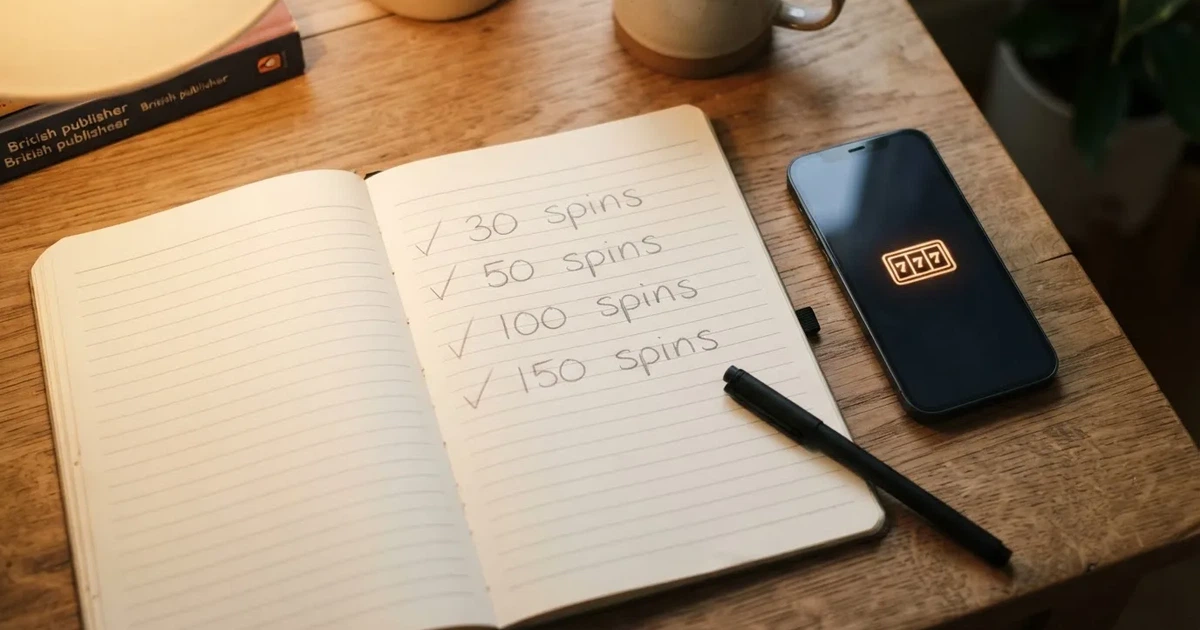
That is the framing this page takes. Every figure that follows comes from the Gambling Commission’s public register or from the Commission’s published rules; nothing has been invented to make a tier look more or less generous. Where the register confirms a brand and where it does not, the difference is stated plainly. The job is to show what each tier costs the reader and which operators meet the licensing standard the Commission’s rules demand of them.
Table of Contents
- Why the Tier Number Matters Less Than the Licence Behind It
- The Gambling Commission’s Rules That Apply to Every Tier
- Safer-Gambling Tools That Travel With Every Tier
- Getting Winnings Out: Payments, Speeds and Constraints
- How the Wagering Cap Reshapes Each Tier
- What Each Tier Buys the Reader
- How the Featured Brands Compare on Licensing
- The Licensing Standard Above the Brand
- What the Register Cannot Tell the Reader
- The Right Question to Ask Before Claiming
- How to Verify a Brand in Five Minutes
- What a Tier Comparison Cannot Settle
- Frequently Asked Questions
Why the Tier Number Matters Less Than the Licence Behind It
Every no-deposit spin offer in Great Britain — thirty spins, a hundred, a hundred and fifty — sits behind a Gambling Commission operating licence. The Commission’s public register, searchable at gamblingcommission.gov.uk, is the only authoritative test of whether a brand holds one. On 18 September 2026 the register listed 139 businesses holding an active remote casino operating licence; the same register’s domain list held 1065 active and 361 white-label domain entries. A white-label site trades under another company’s licence rather than holding its own, which means the licence-holder on the register is the party accountable to the Commission for safer-gambling and complaint handling, even when the visible brand is something different.

The remote licence number follows a fixed structure. It begins with the six-digit account number of the licence holder, the letter “R” marking it as remote, a second identifying number and a short suffix. Platinum Gaming Limited’s remote casino licence is 045322-R-324275-019; PPB Games Limited’s is 039411-R-319335-010. Anyone can verify a brand by matching its domain to its licence number in the register’s CSV or Excel download — a check that takes seconds and proves more than any marketing page ever will.
The relevance to a tier comparison is straightforward. The size of a spin bundle tells the reader how many reels they can spin. It says nothing about whether the brand has a current Commission licence, whether it is enrolled in GAMSTOP, whether it follows the credit-card ban, or whether it has to apply the wagering cap. Those are properties of the licence, not of the bundle.
The Gambling Commission’s Rules That Apply to Every Tier
The Commission applies the same rules to a 30-spin offer and a 150-spin one because the rules attach to the licence, not to the promotional headline. The main levers a reader should know are these.

A wagering requirement is the multiplier a casino applies to whatever is won from the bonus before the balance becomes withdrawable. From 19 December 2025 the Commission capped this multiplier at 10x for any casino bonus offered to a UK player. Mixed-product bonuses, where a sports bet unlocks casino spins or vice versa, are banned under the same reform. The cap means that the headline “150 free spins” is, on the cost side, no worse than “30 free spins” once the multiplier is fixed — what changes is the amount being multiplied, which is where the tier number has its only real effect.
Identity verification has been mandatory before the first deposit or any play since 7 May 2019. A no-deposit offer does not exempt a player from this. Anonymous play is not possible at a licensed site. The reader’s name, address and date of birth are checked before any spin is taken, regardless of whether the bundle is paid for.
Credit cards have been banned for gambling across all online and offline products in Great Britain since 14 April 2020, and the ban extends to credit-card-funded e-wallets. Debit cards and bank transfers are unaffected. A no-deposit offer sidesteps this rule only because no money moves at the start, not because it is treated differently once winnings exist.
Auto-play on slots is banned and a spin cannot be faster than 2.5 seconds. Losses disguised as wins — slot outcomes that celebrate a spin that returned less than the stake — have also been banned. These rules apply to the game the spins run on, not to the size of the bundle, so a 150-spin bundle is just thirty seconds longer of regulated gameplay than a 30-spin one.
A maximum stake per game cycle applies to online slots: £5 for players aged 25 and over, in force from 9 April 2025; £2 for 18-24, from 21 May 2025. The stake figure is what feeds the wagering calculation, and the cap matters because a bundle priced above it cannot be cleared in a single stake per spin. Each tier has to be cleared at the regulated stake, which means the time-cost of the bonus scales with the tier number.
There is no state-set deposit or loss ceiling. From 31 October 2025 the operator must prompt a customer to set a financial limit before the first deposit. For a no-deposit offer the first deposit may follow the bonus, so the prompt often fires before the reader has paid anything in. The Commission’s stance is that the prompt is the floor, not the ceiling; a player can set a tighter limit and the operator is required to honour it.
Financial vulnerability checks trigger at £150 net deposits in a rolling 30-day window, using public data only, in force from 28 February 2025. A no-deposit bundle that pays out nothing never crosses that line, but a bundle that returns enough to deposit will. Wider financial risk assessments are announced but not yet enforced.
GAMSTOP, the national online self-exclusion scheme, has been a mandatory condition of every online licence since 31 March 2020. Self-exclusion runs for six months, one year or five years and cannot be cancelled early. Every tier of a no-deposit offer sits behind GAMSTOP enrolment, so a self-excluded player cannot reach any of them.
Tax is not the reader’s concern. UK players pay no tax on gambling winnings; operators pay Remote Gaming Duty, raised from 21% to 40% from 1 April 2026. That is a model note only; the reader’s liability is nil.
Safer-Gambling Tools That Travel With Every Tier
The safer-gambling measures attached to a UK remote casino licence are not optional, and they apply identically across all four spin-count tiers. A reader who is comparing a 30-spin offer with a 150-spin one is comparing two products that come with the same safeguards.
GAMSTOP is the principal one. The register is the single national scheme, and a self-exclusion entered there is enforced at every GB-licensed site. The scheme does not let the reader reopen the account before the period ends; the only way back is to wait it out.
Time-outs are shorter exclusions the reader sets with the operator, typically twenty-four hours to several weeks. They are a softer instrument than GAMSTOP and useful for a cooling-off rather than a permanent break.
Reality checks are pop-up reminders during play, set by the reader, that report session time and net position. They are mandated by the Commission and available at every licensed site.
Financial vulnerability checks, mentioned above, run in the background at the £150 net deposit threshold. They use publicly available data and may trigger a softer interaction with the operator about affordability. A no-deposit bundle that never gets converted into a deposit stays below this line; a bundle that returns enough to deposit can put the reader on it.
The National Gambling Helpline, run by GamCare, and the GambleAware signposting service are the Commission’s named referral routes. GamCare and GambleAware are not the regulator; the regulator is the Commission, and a complaint about an operator’s conduct is filed with the Commission, not with either of those services.
For the cost-conscious reader, the point is that no tier of a no-deposit offer lowers the safeguards in any way. A 150-spin bundle is not a “softer” entry point than a 30-spin one in the eyes of the Commission’s rules. Both sit behind the same GAMSTOP enrolment, the same financial vulnerability checks and the same reality-check pop-ups.
Getting Winnings Out: Payments, Speeds and Constraints
A no-deposit offer does not move money in, but it moves money out once wagering is cleared. The payment options, the speed of withdrawal and any conditions attached to a withdrawal apply the same way regardless of how many spins produced the balance. The relevant rails in the UK are debit cards, bank transfers and a small set of e-wallets, with the Faster Payments Service carrying most bank-to-bank transfers.
The Faster Payments Service launched in 2008 and is operated by Pay.UK. It runs twenty-four hours a day, seven days a week. Most payments arrive instantly or within a couple of minutes; transfers occasionally take up to two hours when the system queues. The Faster Payments scheme sets a £1,000,000 per-transaction ceiling, though individual banks routinely apply lower limits to their customers. A typical no-deposit payout clears Faster Payments within minutes, with the bank-side limit doing more to slow a withdrawal than the casino side does.
Debit cards are the most common deposit rail at UK-licensed casinos and the most common withdrawal rail for smaller payouts. The same card used to deposit is normally required for withdrawal under anti-money-laundering rules, so the reader’s choice of deposit card shapes the withdrawal card as well. Credit cards are not an option in either direction.
Bank transfers via Faster Payments handle larger payouts cleanly. A reader withdrawing several hundred pounds from a cleared bonus will often see it within minutes; the operator’s internal approval queue is the more likely bottleneck than the rail itself.
Apple Pay, developed by Apple Inc. and launched on 20 October 2014, supports UK-issued cards from 14 July 2015. It protects card data through tokenisation, replacing the actual card number with a device-specific tokenised Device Primary Account Number and generating a dynamic security code per transaction. In-store payments use near-field communication; in-app and online casino payments use a different mechanism, but the tokenisation is the same. The reader’s casino accepts Apple Pay through a supported issuer if the casino has integrated it as a deposit method, and the same tokenisation keeps the card number off the casino’s books. Apple Pay is not available in every market and not every UK issuer supports it; readers should check their own card issuer before relying on it at the cashier. On an iPhone with Face ID the reader authorises in-store payments by double-clicking the side button; on a Touch ID model by double-clicking Home. The November 2024 US Consumer Financial Protection Bureau rule and the 2020 European Commission investigation into iPhone NFC access are noted for context but do not affect a UK player’s day-to-day use of Apple Pay at a GB-licensed casino.
AstroPay was founded in 2009 and is headquartered in Uruguay. It operates a global digital wallet offering online payments, virtual and physical debit cards and peer-to-peer transfers, with a UK entity, Larstal Limited, authorised by the Financial Conduct Authority under the Electronic Money Regulations 2011. Its Isle of Man entity, AstroPay Global (IOM) Limited, is licensed by the Isle of Man Financial Services Authority for money transmission. AstroPay’s Brazilian entity is authorised by the Brazilian Central Bank as an electronic currency issuer and its Danish entity is authorised by the Danish Financial Supervisory Authority. AstroPay serves users across markets including Argentina, Australia, Brazil, Canada, Colombia, Denmark, Spain, the United Kingdom, the United States and Uruguay. A UK casino that lists AstroPay at the cashier is routing the deposit through an FCA-authorised electronic money institution; the player is not protected by GAMSTOP through AstroPay but is protected at the casino itself. AstroPay spun off its payment-processing business, dLocal, as a separate company in 2016 — relevant only because the two are sometimes confused in marketing material.
E-wallets and prepaid vouchers work for deposits at many UK-licensed casinos, but the withdrawal often has to revert to a debit card or bank transfer under anti-money-laundering rules. A no-deposit balance paid out via e-wallet can require an additional verification step, with the operator asking for a bank statement or a proof-of-funds document before the funds are released. This is the same rule that constrains a 30-spin payout and a 150-spin payout — the rail does the lifting.
The credit-card ban, in force since 14 April 2020, blocks credit cards and credit-card-funded e-wallets at the cashier. The Commission estimated around 800,000 UK consumers used credit cards to gamble in 2018 and found 22% of online gamblers who used credit cards were classed as problem gamblers. The ban is the Commission’s response and it is a hard line at every tier.
For a reader weighing tiers on the payment side, the takeaway is that the rail that moves the deposit also moves the withdrawal, and Faster Payments is fast enough that any of the four tiers will clear inside a working day once wagering is satisfied. The bottleneck is wagering, not payments.
How the Wagering Cap Reshapes Each Tier
The 10x wagering cap that came into force on 19 December 2025 is the rule that determines how long each tier takes to clear and what the effective cost of the bundle is. The arithmetic is the same in every case: required turnover equals bonus value multiplied by the wagering factor; spins equal turnover divided by the regulated stake; play time equals spins multiplied by a five-second interval. The Commission banned faster-than-2.5-second spins, so a five-second interval is a fair working assumption for any regulated game.
Worked against the most common figures, the picture is sharp. A 30-spin bundle at £0.10 per spin returns roughly £3 of bonus value, which under a 10x wagering cap requires £30 of qualifying turnover. At a £2 stake per spin (the 18-24 cap), that is 15 spins and about seventy-five seconds of play. At the £5 stake for 25+, it is six spins and thirty seconds. A 50-spin bundle at the same £0.10 stake returns £5 of bonus value and requires £50 of turnover, twenty-five spins at £2 or ten spins at £5. A 100-spin bundle at £0.10 returns £10 of bonus value and requires £100 of turnover, fifty spins at £2 or twenty spins at £5. A 150-spin bundle at £0.10 returns £15 of bonus value and requires £150 of turnover, seventy-five spins at £2 or thirty spins at £5.
The headline difference between a 30-spin and a 150-spin tier is, in time, the difference between a minute of regulated play and three minutes at the same stake. The 10x cap compresses the cost of clearing any tier to a small number of additional spins, which is the Commission’s point: the cap exists to make sure a bonus does not demand unreasonable play. The size of the bundle still moves the headline figure, but the wagering cap neutralises the difference in time-cost.
The expected-loss arithmetic adds a second pass. At a typical slot RTP of around 96%, the house edge is roughly 4%. The £30 turnover on a 30-spin tier carries an expected loss of about £1.20; £50 turnover on the 50-spin tier, £2; £100 on the 100-spin tier, £4; £150 on the 150-spin tier, £6. Each figure is the bonus’s expected cost to the player under the stated assumptions, the average of many spins and not a guaranteed outcome for any one session. The spread across tiers is £4.80 between 30 and 150, which is what the bundle size actually buys in real money, once the Commission’s cap has done its work.
What the cap does not do is remove the maximum-win rule. Many no-deposit bundles carry a cap on how much of the bonus balance can be converted into withdrawable cash, frequently £50 or £100 regardless of how the bonus played. A 30-spin tier at the £50 cap is a different proposition from a 150-spin tier at the same cap. The cap, not the bundle size, is what determines the reader’s ceiling.
What Each Tier Buys the Reader
A tier comparison is only useful if the comparison tells the reader which number makes sense for which situation. The four tiers are not interchangeable, and the right one depends on what the reader is willing to spend in time and what ceiling they are willing to accept.
The 30-spin tier is the entry point. It produces the smallest bonus balance and the smallest expected loss, but also the lowest maximum-win cap on most offers. A reader testing a brand for the first time, who values the licensing check over the balance, finds the 30-spin tier the cheapest way to confirm that a casino pays out and that the Commission’s rules are being applied. The time-cost is roughly a minute of regulated play under the £2 stake and under thirty seconds under £5.
The 50-spin tier is the middle option. Its expected loss sits between £2 and £3 depending on stake, and the maximum-win cap often rises with it. A reader who has already checked the licence and is comfortable with the brand will find the 50-spin tier a reasonable balance between bundle size and the Commission’s play-time constraint. A £0.10-per-spin 50-spin bundle clears in two minutes at the 25+ stake and five minutes at the 18-24 stake.
The 100-spin tier is the high-water mark for most no-deposit offers in the UK market. It is the largest bundle a reader will commonly see attached to a free, no-deposit trial. The expected loss is around £4 and the time-cost is two to five minutes depending on stake. A reader who wants the largest trial bundle the Commission’s rules permit typically finds their match here.
The 150-spin tier is rare. Most GB-licensed operators cap their no-deposit spin offers below 100, because the 10x wagering cap makes a bundle above that line expensive to administer without delivering much more to the player. When the tier appears, it is often split across several days or several games, and the maximum-win cap usually rises accordingly. A 150-spin reader is at the upper edge of what the market offers and should read the terms as carefully as for a 30-spin one — the bundle is bigger, the rules are the same.
The honest summary is that all four tiers clear in minutes once the wagering cap is in place, and the difference between them is the difference between £1.20 and £6 of expected loss. What the bundle size does buy is the maximum-win cap, which is set by the operator rather than by the Commission. A higher tier is not automatically a better offer; a higher tier with the same cap as a lower one is just more spins for the same ceiling.
How the Featured Brands Compare on Licensing
The brands in this comparison are taken from the Gambling Commission’s public register and listed below in the order they appear in the research. The register’s domain status tells the reader whether the brand is currently active, inactive or running as a white-label. All ten hold a GB remote casino operating licence. Several brands share one licensee: Unibet and 32Red both sit under Platinum Gaming Limited, and any analysis of those two brands should treat them as the same licensed parent for safer-gambling and complaint purposes even though the visible brands differ.
| Brand | Licence holder and GB remote casino licence | Domain status on the register | Subject support |
|---|---|---|---|
| 32Red | Platinum Gaming Limited, 045322-R-324275-019 | Active domain | — |
| Midnite | Dribble Media Limited, 042647-R-321653-022 | Active domain | — |
| Sky Vegas | Bonne Terre Gaming Limited, 065519-R-339675-002 | Active domain | — |
| Jackpotjoy | Gamesys Operations Limited, 038905-R-319430-022 | Active domain | — |
| BetVictor | BV Gaming Limited, 039576-R-319370-028 | Active domain | — |
| Casumo | Recro Limited, 061549-R-336718-002 | Active domain | — |
| Coral | LC International Limited, 054743-R-330863-014 | Active domain | — |
| Unibet | Platinum Gaming Limited, 045322-R-324275-019 | Active domain | — |
| Paddy Power | PPB Games Limited, 039411-R-319335-010 | Active domain | — |
| bet365 | Hillside (UK Gaming) ENC, 055149-R-331499-004 | Active domain | — |
The brand-level entries that follow are organised by the comparative angle each brings to a reader comparing 30, 50, 100 and 150-spin no-deposit offers. Each write-up covers what the licensing record shows, where the brand fits in the wider picture, and where the reader should read the offer’s small print. No entry recommends the brand as a place to play; the entry’s job is to give the reader what the licensing record and the published terms actually say.
32Red — Same Licence Holder as Unibet
Platinum Gaming Limited is the operator behind 32Red (account 45322, licence 045322-R-324275-019), with 32red confirmed as an active domain. This licence also covers Unibet, meaning both brands share the same licensed parent and regulatory obligations.
On the licensing test that the register provides, 32Red passes. The Commission’s rules apply identically to an offer of 30 or 150 spins at 32Red because they apply identically to any GB-licensed operator. A reader’s choice between tiers at this brand comes down to the offer terms rather than the licence.
The verdict for this brand is that the licence record is clean, the shared licence with Unibet makes a complaint to the Commission equally valid for either brand, and the reader’s actual decision sits in the offer terms — specifically the maximum-win cap, the wagering structure and the eligible games. Where the bundle is 30, 50, 100 or 150 spins, the cap on what can be withdrawn is the figure that matters most.
Midnite — Youngest-Looking Licence Holder in the Set
Dribble Media Limited is the licence holder for Midnite (account 42647, licence 042647-R-321653-022), and Midnite.com is an active domain. As a newer operator, Midnite has a different profile than the legacy brands listed here, yet it maintains the same active registration status mandated for all GB-licensed operators.
On the tier comparison, Midnite’s licence means the Commission’s rules apply to any tier it offers. The 10x wagering cap binds every bonus, the credit-card ban binds every deposit rail and the GAMSTOP enrolment is mandatory. The reader’s comparison across tiers here is a comparison across the operator’s offer terms, not its licence.
The verdict for Midnite is that the licence is in good standing on the register, the brand is newer than most of the set, and the reader should still apply the standard tier-comparison questions: what is the maximum-win cap on each tier, which game is the spin bundle attached to, and what is the wagering requirement? The licence confirms the operator’s right to offer the bundle; it does not tell the reader anything about what the bundle is worth.
Sky Vegas — Bonne Terre Gaming’s GB Casino Brand
Bonne Terre Gaming Limited is the GB remote casino licence holder for Sky Vegas (account 65519, licence 065519-R-339675-002), with Sky Vegas an active domain. While the Sky name extends across various products, the casino operation is legally and distinctively held by Bonne Terre Gaming Limited.
On the licensing check, Sky Vegas is one of the cleaner entries in the set. The register status is active and the licence number is in the standard form. Any tier comparison at Sky Vegas is a comparison of offer terms rather than licensing — every GB-licensed casino is on the same regulatory footing, and the differentiator is what the brand has done with the offer.
The verdict for Sky Vegas is that the licence is current and the brand’s tier comparison is an offer-terms comparison. A reader picking between a 30-spin and a 150-spin bundle at Sky Vegas should look at the maximum-win cap and the eligible games rather than the licence, which is the same on either side of the comparison.
Jackpotjoy — Gamesys Operations’ GB Casino Brand
Gamesys Operations Limited operates Jackpotjoy under account 38905 (licence 038905-R-319430-022), with Jackpotjoy.com verified as an active domain. This operator has a long-standing presence in the UK market, and its licence record is consistent with established industry standards.
For a reader comparing 30, 50, 100 and 150-spin no-deposit offers, Jackpotjoy sits on the same regulatory footing as every other brand in the table. The Commission’s rules apply identically to every tier. The shared regulatory footing means the comparison’s signal lies in the offer terms rather than the licence.
The verdict for Jackpotjoy is that the licence is current and the comparison across tiers comes down to the maximum-win cap, the eligible games and the wagering requirement. A reader at this brand is choosing between tiers offered by the same operator under the same licence, and the difference is the headline figure rather than the regulatory regime.
BetVictor — BV Gaming’s Casino Brand
BV Gaming Limited is the licence holder for BetVictor (account 39576, licence 039576-R-319370-028), and Betvictor.com is an active domain. BetVictor operates its casino services directly under this established BV Gaming Limited licence.
The relevant point for a tier comparison is that BetVictor’s licence is current and the brand shares the same regulatory requirements as the rest of the table. A 30-spin and a 150-spin offer at BetVictor both sit behind the same 10x wagering cap, the same GAMSTOP enrolment and the same anti-money-laundering controls. The difference is in the offer.
The verdict for BetVictor is that the licence is current and the tier comparison comes down to offer terms. A reader who is deciding between BetVictor’s tiers is comparing two products from one operator, which means the bundle size and the maximum-win cap are the figures to compare, not the licensing record.
Casumo — Recro Limited’s GB Casino Brand
Recro Limited is the GB remote casino licence holder for Casumo (account 61549, licence 061549-R-336718-002), with Casumo.com recorded as an active domain. Casumo is well-known in the UK, and its licence standing reflects that familiar market position.
For the tier comparison, Casumo is on the same regulatory footing as the rest of the table. The 10x wagering cap, the GAMSTOP enrolment, the credit-card ban and the auto-play rules all apply identically across the four tiers. The reader’s comparison is an offer-terms comparison.
The verdict for Casumo is that the licence is current and the tier comparison at this brand is, like the rest of the table, a comparison of offer terms rather than licensing. A reader comparing tiers at Casumo should focus on the maximum-win cap, the eligible games and the wagering requirement, since the regulatory footing is consistent across all four tiers.
Coral — LC International’s Casino Brand
LC International Limited provides the GB remote casino licence for Coral, account 54743 (licence 054743-R-330863-014), with coral.co.uk an active domain. This licence holder also covers other prominent UK brands, including Ladbrokes and Gala Bingo, making it a larger operator than the coral.co.uk domain name might suggest.
For the tier comparison, Coral shares the same regulatory requirements as the rest of the table. A 30-spin and a 150-spin offer at Coral both pass through the same Commission’s safer-gambling and AML controls. The reader’s comparison at Coral is, again, an offer-terms comparison.
The verdict for Coral is that the licence is current, the licence holder is a larger operator than the brand alone implies, and the tier comparison comes down to offer terms. The shared licence with Ladbrokes and Gala Bingo means the Commission’s complaint route covers all three brands at the same address, which is a small but real benefit for a reader who values the regulatory backstop.
Unibet — Same Licence Holder as 32Red
Platinum Gaming Limited manages the GB remote casino licence for Unibet, account 45322 (licence 045322-R-324275-019), and the register records unibet.co.uk as an active domain. This entity is the same licence holder responsible for 32Red, meaning these two brands share the same safer-gambling and complaint-handling regime.
The point that matters for a reader comparing tiers is that Unibet’s licence is current and the comparison across tiers is an offer-terms comparison. The 10x wagering cap applies to every tier; the GAMSTOP enrolment applies to every tier; the credit-card ban applies to every deposit. The reader’s decision is over what each tier delivers in bonus value and what the maximum-win cap allows.
The verdict for Unibet is that the licence is current, the shared licence with 32Red simplifies the Commission’s complaint route, and the tier comparison is an offer-terms comparison. A reader picking between a 30-spin and a 150-spin bundle at Unibet is choosing between two products from one operator, and the decision rests on the bonus terms rather than the licensing itself.
Paddy Power — PPB Games’ Casino Brand
PPB Games Limited holds the GB remote casino licence for Paddy Power (account 39411, licence 039411-R-319335-010), and Paddy Power is an active domain. This operator is part of the Flutter gambling group, a fact well-reflected in its regulatory licensing history.
For the tier comparison, Paddy Power is on the same regulatory footing as the rest of the table. An offer of 30 or 150 spins at Paddy Power both sit behind the same Commission’s rules. The reader’s comparison is an offer-terms comparison.
The verdict for Paddy Power is that the licence is current and the comparison across tiers comes down to offer terms. A reader comparing tiers at this brand should focus on the maximum-win cap and the eligible games, knowing the regulatory standards are unified regardless of the bundle count.
bet365 — Hillside (UK Gaming) ENC’s Casino Brand
Hillside (UK Gaming) ENC holds the GB remote casino operating licence behind bet365, account 55149, with the active remote licence 055149-R-331499-004. The register lists Bet365.com as an active domain. Hillside (UK Gaming) ENC is one of the larger operating companies in the UK online gambling market and the licence record reflects that scale.
On the tier comparison, bet365 is on the same regulatory footing as the rest of the table. The 10x wagering cap, the GAMSTOP enrolment and the credit-card ban all apply identically to an offer of 30 or 150 spins at bet365. The reader’s decision is an offer-terms decision.
The verdict for bet365 is that the licence is current and the tier comparison comes down to offer terms. A reader comparing bet365’s tiers is comparing two products from one operator, with the maximum-win cap and the eligible games as the figures to weigh.
The Licensing Standard Above the Brand
The shared regulatory regime is the single most important thing the table above shows. Every brand in the comparison holds an active GB remote casino operating licence on 18 September 2026. Every brand is enrolled in GAMSTOP. Every brand applies the 10x wagering cap and the credit-card ban. The brand-level differences are in offer terms, in eligible games and in maximum-win caps, not in the licence that authorises them to operate.
The corollary is that a tier comparison has to look past the brand to the offer. The reader comparing a 30-spin offer with a 150-spin one is comparing two offers from one operator (if they stay at the same brand) or two offers from operators on the same regulatory footing (if they cross brands). The Commission’s rules do not change between the four tiers. What changes is the offer’s headline figure, its maximum-win cap and the eligible games.
For a reader who is willing to read the small print, the tier comparison is a useful exercise. The 10x cap makes the wagering cost small at any tier; the maximum-win cap is the figure that sets the ceiling; the eligible game determines the volatility the reader is signing up for. A 30-spin bundle at a low-cap, low-volatility game is a different proposition from a 150-spin bundle at a high-cap, high-volatility game, and the Commission’s rules apply to both.
What the Register Cannot Tell the Reader
The Commission’s public register is the authoritative test of a brand’s licence. It is not, and was never meant to be, a test of an offer. The register confirms whether a brand can take UK customers. It does not tell the reader whether a particular spin bundle at that brand is generous or stingy, whether the maximum-win cap is high or low, or whether the eligible game is one the reader wants to play.
A reader comparing tiers across the ten brands above is doing a comparison that the register cannot do. The register gives the licence status and the licence holder; the offer terms give the bundle size, the wagering factor, the maximum-win cap and the eligible games. The two pieces of information are complementary and the reader needs both.
A register lookup is fast. A brand’s domain can be matched to a licence account in seconds, and the licence number confirms the licence holder. The reader who skips this step is taking the marketing page’s word for the licence, which is not the same as checking the register.
A register lookup is also free. The Commission’s website offers the full register as a CSV or Excel download, and a quick search of the relevant licence holder is enough to confirm a brand. The cost of the lookup is the time it takes to type a brand name into the search box, which is the smallest possible time-cost a reader can pay for any check.
The limit of the register is that it tells the reader nothing about offer value. A 30-spin offer and a 150-spin offer at the same brand, both at the same licence holder, can have wildly different maximum-win caps and the register will look the same for both. The reader’s tier comparison has to look at the offer terms to find that difference.
The Right Question to Ask Before Claiming
The four tiers exist to give the reader a choice of bundle size. The Commission’s rules apply the same way to every tier. The differences that matter are in the offer terms.
The first question to ask is what the maximum-win cap is. A 30-spin offer with a £100 cap delivers a different proposition from a 30-spin offer with a £20 cap, regardless of how the spin count compares. The cap is the ceiling on what the bundle can return.
The second question is what the wagering requirement is. From 19 December 2025 the cap is 10x, and any offer above that line is non-compliant with the Commission’s rules. A reader who sees a higher multiplier is looking at an offer that should not be available at a GB-licensed site.
The third question is which game the bundle is attached to. A spin bundle at a low-volatility game with a high RTP is a different proposition from the same bundle at a high-volatility game with a lower RTP. The Commission’s rules do not specify the eligible game; the operator does.
The fourth question is how long the bundle is valid. The Commission’s rules do not specify a validity period; the operator does, and a bundle that expires in twenty-four hours is a different proposition from one that runs for seven days. The validity period is set by the operator and printed in the offer terms.
A reader who has asked those four questions is in a position to compare the four tiers honestly. The Commission’s rules provide the regulatory backstop; the offer terms provide the actual value. The tier number itself is the smallest part of the comparison.
How to Verify a Brand in Five Minutes
The Commission’s register is publicly searchable. The fastest check is to take the brand’s domain and search for it in the register’s domain list. The search returns the licence account that runs the domain, the licence status (Active, Inactive or White Label) and the licence number. The reader then matches the licence number to the licence holder on the register’s business list.
A check that finds an “Active” status and a current remote casino licence is a check that passes. A check that finds an “Inactive” status, a missing licence number or a white-label entry under a brand the reader does not recognise is a check that flags the offer for further reading. The reader does not need a legal background to do this; the register is designed for public use.
A reader who wants a fuller picture can download the register’s CSV or Excel file and search it offline. The same fields apply, with the added benefit of being able to sort the register by status. The Commission’s download is the authoritative version and any discrepancy between an operator’s marketing page and the register should be resolved in favour of the register.
The whole exercise takes five minutes for one brand and a few minutes more for several. It is the only test of a licence that does not depend on the operator’s own claims, and it is the single most useful five minutes a reader can spend before claiming any tier of a no-deposit offer.
What a Tier Comparison Cannot Settle
A tier comparison settles the question of which bundle size delivers the most bonus value under the same rules. It does not settle the question of whether any no-deposit offer is worth claiming in the first place.
The Commission’s rules apply to every tier, but the rules do not make any tier profitable for the player. The 10x cap reduces the time-cost of clearing a bonus; it does not change the house edge. The maximum-win cap protects the operator’s exposure; it does not guarantee the player a return. The expected-loss arithmetic above shows what each tier costs on average; it does not promise what any individual session will return.
A reader who wants the most generous offer is asking the wrong question. The right question is which offer has the lowest expected loss for the highest maximum-win cap, which is a comparison the offer terms support and the licence does not. The licence tells the reader the offer is regulated; the offer terms tell the reader what the regulation does and does not protect.
The 30, 50, 100 and 150-spin tiers are a useful marketing distinction for the operator and a useful comparison for the reader. They are not, on their own, a measure of value. The Commission’s rules have made sure they cannot become one, and the register has made sure the reader can verify the licence behind any of them.
Frequently Asked Questions
Does a 150-spin no-deposit offer give the reader more than a 30-spin one?
A 150-spin bundle returns roughly five times the bonus value of a 30-spin bundle at the same per-spin stake, so the headline figure is bigger. The Commission’s 10x wagering cap, in force since 19 December 2025, applies the same way to both tiers, so the time-cost scales with the bundle rather than the multiplier. The maximum-win cap is the figure that determines what the reader can walk away with, and that cap is set by the operator, not by the Commission. A bigger bundle with the same cap is more spins for the same ceiling, which is why the tier number alone is not the whole comparison.
Do the wagering requirements change between the 30, 50, 100 and 150-spin tiers?
No. From 19 December 2025 the Gambling Commission caps wagering requirements at 10x for any casino bonus offered to a UK player. The cap applies identically to a 30-spin and a 150-spin offer at any GB-licensed operator. A reader who sees a multiplier above 10x is looking at an offer that should not be available at a licensed site, and the Commission’s register is the test of whether the site is licensed.
Is there a maximum win cap that applies across all the spin-count tiers?
The maximum-win cap is set by the operator, not by the Commission. Most no-deposit bundles carry a cap on what can be converted from bonus balance into withdrawable cash, commonly £50 or £100. The cap applies regardless of how many spins produced the balance, and a 30-spin offer at a high cap can be more generous than a 150-spin offer at a low cap. The offer terms are where the cap is printed, and the offer terms are what the reader should compare across tiers.
Does GAMSTOP self-exclusion cover every tier of a no-deposit spins offer?
Yes. GAMSTOP has been a mandatory condition of every online Gambling Commission licence since 31 March 2020. A self-excluded player cannot reach a 30-spin offer, a 50-spin offer, a 100-spin offer or a 150-spin offer at any GB-licensed site. Self-exclusion runs for six months, one year or five years and cannot be cancelled early, and the only way back is to wait the period out.
How long do winnings from a 50 or 100-spin no-deposit offer stay valid?
The validity period is set by the operator and printed in the offer terms, not by the Commission. Common periods are twenty-four hours to seven days, with some bundles running longer. A bundle that expires in twenty-four hours requires immediate play; one that runs for seven days gives the reader more flexibility. The validity period is part of the offer terms and should be read alongside the maximum-win cap and the wagering factor.
Must every spin-count tier come from a Gambling Commission-licensed site?
Yes, for any reader in Great Britain. The Gambling (Licensing and Advertising) Act 2014 requires every operator taking customers in Great Britain to hold a Commission licence, regardless of where the operator is based. A Curaçao, Maltese or Gibraltar licence is not a substitute. The Commission’s public register is the test of whether a brand holds a GB licence, and the register is searchable at gamblingcommission.gov.uk. Providing gambling to people in Great Britain without a Commission licence is an offence under section 33 of the Gambling Act 2005.