
Birthday bonus casinos in the UK — what the offer actually costs
A birthday bonus looks like a freebie, and that is exactly why it deserves to be read carefully. A licensed British casino can hand one out, but it does so inside the same regulatory cage as every other promotion: a ten-times wagering cap that took effect on 19 December 2025, identity checks that have to clear before a single penny is paid out, and GAMSTOP self-exclusion that no marketing department is allowed to overrule. None of that is a special exemption. The birthday label changes the wrapper, not the contents.

The angle on this page is cost — what the offer demands of the person who claims it, not what the operator says it is worth. The market is crowded: the Gambling Commission’s public register held 139 businesses holding an active remote casino operating licence on 18 September 2026, and 1,065 active domains with another 361 white-label entries trading under someone else’s licence. A reader choosing between them needs more than a list.
Current as of 7 November 2026. Licence status verified against the Gambling Commission’s public register of gambling businesses, downloaded on 18 September 2026.
Table of Contents
- How the licence cage shapes a birthday bonus
- Responsible gambling rules a birthday bonus cannot overrule
- Payments and payout speed — what changes when the bonus is on the account
- How birthday bonuses are built, and the 10x band that now governs them
- The Ten Licensed Brands Reviewed Here
- The fundamentals of a birthday bonus in plain English
- The offshore trap and the cost of leaving the cage
- Frequently asked questions
How the licence cage shapes a birthday bonus
The legal frame is the same one that governs welcome offers, free-spin drops and reload bonuses. There is no carve-out for the calendar.
The Gambling Commission, sponsored by the Department for Culture, Media and Sport, regulates commercial gambling in Great Britain under the Gambling Act 2005. Since the Gambling (Licensing and Advertising) Act 2014 any operator taking customers in Great Britain needs a Commission licence wherever it is incorporated; a Curaçao, Maltese or Gibraltar licence is not a substitute. Online casino is a licensable activity, and the public register is the whole test of whether a brand holds one. The licence number itself has a fixed shape — six digits for the account holder, an “R” marking a remote licence, a running number, and a suffix of three digits — so a reader who wants to verify a claim can match what the operator prints against what the register holds.
Three rules from the framework matter most for a birthday promotion.
First, since 19 December 2025, no licensed casino can attach a wagering requirement above ten times the bonus amount to any promotion, birthday or otherwise. The cap was set to stop operators from multiplying bonus costs past the point where any reasonable player could clear them. For a £10 birthday bonus, ten times means £100 of qualifying play before withdrawal; for a £50 offer, £500. The band that follows later in this page shows what that looks like in hours.
Second, since 14 April 2020 no player in Great Britain can fund gambling with a credit card. The Commission estimated that around 800,000 UK consumers used credit cards to gamble in 2018 and that 22 per cent of online gamblers who used credit cards were classed as problem gamblers. The ban covers credit cards routed through e-wallets too — a point worth noting because some wallets advertise “credit” and “debit” lines that look interchangeable but are not. A birthday bonus that lands without a deposit still has to be withdrawn to a verified payment method, and that method will be a debit card, a bank transfer or an e-wallet funded from one.
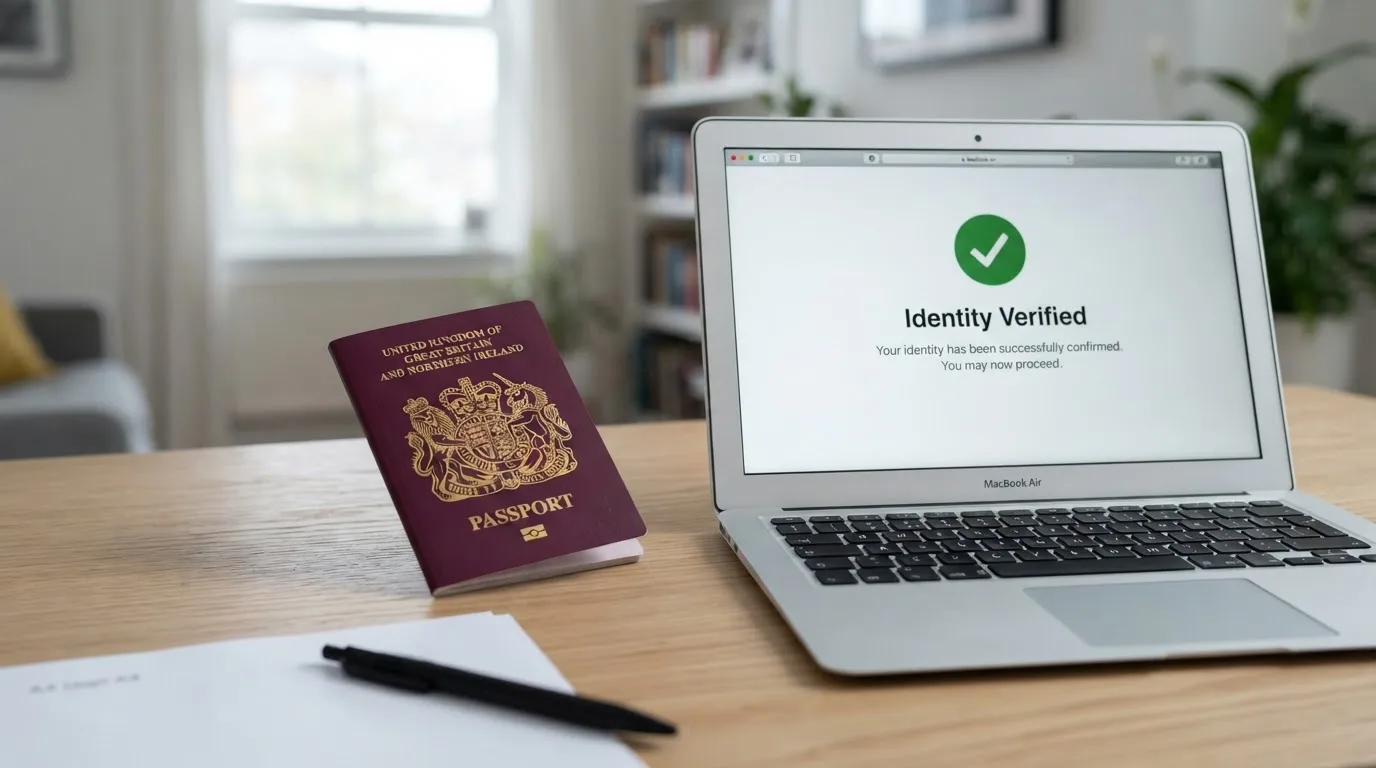
Third, no anonymous play. A licensed site has to verify the player’s name, address and date of birth before the first deposit or any play, a requirement in force since 7 May 2019. That check is the reason a birthday bonus cannot be claimed twice — the date of birth on the account is the date the operator uses, and it has already been matched against documents. The verification is not a marketing formality; it is a condition of holding the licence.
Responsible gambling rules a birthday bonus cannot overrule
The same protective architecture that governs any licensed offer governs a birthday bonus. The promotions team does not get to soften it for one week of the year.
Every online casino licensed in Great Britain must take part in GAMSTOP, the national online self-exclusion scheme. Self-exclusion runs for six months, one year or five years and cannot be cancelled early — a person who signed up cannot log in to claim a birthday bonus, and the operator is required to enforce that. The check runs at the operator’s end before any deposit, any bonus credit and any spin.
Deposit limits are the second rail. There is no state-set ceiling on what a player can deposit, but operators must prompt the customer to set a financial limit before the first deposit, a requirement in force since 31 October 2025. A birthday bonus does not pause this prompt. If anything, a promotional credit landing in the account gives the operator a fresh chance to flag a player who has been chasing losses, and the licence conditions tell them to use it.
A third rail sits at the slot machine itself. Online slots carry a maximum stake per game cycle — £5 for players aged 25 and over (from 9 April 2025) and £2 for players aged 18 to 24 (from 21 May 2025). A “game cycle” is one spin from start to finish, including any feature rounds the spin triggers, so the £5 and £2 caps apply to the whole cycle rather than to a base wager. Auto-play has been banned since 31 October 2021, and a single spin cannot complete faster than 2.5 seconds. So-called “losses disguised as wins” — celebratory sounds and graphics for a spin that paid out less than the stake — are also banned. None of these rules changes because the bonus carries a birthday label.
Financial vulnerability checks are newer and worth knowing. From 28 February 2025 any player whose net deposits reach £150 in a rolling 30-day window has to pass a vulnerability check using public data. The check does not pause the promotion, but it can lead the operator to ask for further information or to step back the offer.
GAMSTOP, the National Gambling Helpline run by GamCare, and GambleAware are the three names every reader should hold in mind before accepting any bonus.
Payments and payout speed — what changes when the bonus is on the account
Most of the payment discussion on a UK casino page reads the same regardless of the promotion. The credit-card ban, the Faster Payments rails and the wallet options are all stable. A birthday bonus adds three wrinkles.
The first is that a “no deposit” birthday bonus still has to be withdrawn somewhere. A licensed operator cannot pay winnings to an unverified account, so the player has had a name, address and date-of-birth check pass before any withdrawal. The bonus itself credits without a deposit, but the cash-out path is the same one a deposit-funded player would use.
The second is the choice of rail. Bank transfers within the UK typically move through the Faster Payments Service, which has run since 2008 and is operated by Pay.UK. The service runs around the clock and most payments arrive within a couple of minutes; transfers occasionally take up to two hours. The scheme-level per-transaction limit is £1,000,000, but individual banks impose lower limits on their customers. So a £10 bonus with £90 of cleared winnings does not stress the rail at all — the constraint is the operator’s internal approval queue, not the network. Apple Pay sits on top of cards, was developed and operated by Apple Inc., launched on 20 October 2014 in the United States and supported UK-issued cards from 14 July 2015. It protects card data by replacing the real number with a device-specific tokenised Device Primary Account Number and generating a dynamic security code per transaction. Apple Pay in-store purchases use near-field communication; online and in-app purchases work through a different authentication path, with double-click of the side button on Face ID models and double-click of the Home button on Touch ID models. None of this changes what a birthday bonus costs, but it does change what a withdrawal feels like.
AstroPay is the third rail sometimes advertised in this market. It was founded in 2009 and is headquartered in Uruguay. It operates as a global digital wallet offering online payments, virtual and physical debit cards and peer-to-peer transfers, and spun off its payment-processing business, dLocal, as a separate company in 2016. Its UK entity, Larstal Limited, is an electronic money institution authorised by the Financial Conduct Authority under the Electronic Money Regulations 2011; its Isle of Man entity, AstroPay Global (IOM) Limited, is licensed by the Isle of Man Financial Services Authority; its Brazilian entity is authorised by the Brazilian Central Bank as an electronic currency issuer; and its Danish entity, Larstal Denmark ApS, is authorised as an electronic money institution by the Danish Financial Supervisory Authority. AstroPay serves users across Argentina, Australia, Brazil, Canada, Colombia, Denmark, Spain, the United Kingdom, the United States and Uruguay. Where the rail matters for a birthday bonus: a wallet funded from a debit card is fine; a wallet funded from a credit card is not, because the Gambling Commission’s ban follows the underlying source, not the wallet brand.
The credit-card ban and the wallet-franchise point deserve a sentence each, because they are the two payment frictions a birthday bonus can unexpectedly amplify. A player who funds a wallet from a credit card and then deposits from the wallet is still breaching the ban. A player who has used a credit card to fund an e-wallet in the past can find that wallet locked out of gambling in the present.
How birthday bonuses are built, and the 10x band that now governs them
A birthday bonus at a UK-licensed casino can take several shapes. The most common is a small bonus credit — £5, £10 or £20 — that lands in the account on or near the player’s birthday, sometimes bundled with a handful of free spins on a named slot. Some operators attach the offer to activity in the preceding month: deposit at least once in the 30 days before the birthday and the bonus credits automatically; no qualifying deposit and the offer is skipped. Others run a “no deposit” version — the bonus lands without a deposit, and the player’s first deposit after clearing converts any winnings into withdrawable cash subject to the wagering cap.
Two design points shape the cost more than the headline figure does. The first is whether the offer is a deposit-gated package or a true no-deposit credit; the second is whether the wagering requirement sits on the bonus alone or on bonus plus deposit. The Commission’s December 2025 rule capped the requirement at ten times the bonus for casino products, and banned mixed-product bonuses that pair a sports bet with casino spins. A £10 birthday bonus therefore demands £1,000 of qualifying play at most; a £50 offer demands £5,000 at most. Anything above that is no longer a lawful promotion.
The wagering cost below shows what that ten-times band looks like in hours, using the slot-stake caps the Commission sets for player age groups.
Worked example: £10 and £50 birthday bonuses at the legal slot cap
The arithmetic follows the plan: required turnover equals the bonus multiplied by the wagering factor; the number of spins equals turnover divided by stake per spin; and play time equals spins times a five-second interval divided by 3,600.
For a £10 birthday bonus with the ten-times wagering factor in force since 19 December 2025, turnover is £10 multiplied by 10, which is £100. At the £5-per-cycle stake cap for players aged 25 and over (in force from 9 April 2025), that is 20 spins. At five seconds per spin, the run takes roughly 100 seconds — just under two minutes. At the £2-per-cycle stake cap for 18 to 24-year-olds (in force from 21 May 2025), the same £100 of turnover takes 50 spins, or about four minutes and 10 seconds.
For a £50 birthday bonus, turnover is £50 multiplied by 10, which is £500. At the £5 cap, that is 100 spins or about eight minutes and 20 seconds. At the £2 cap, it is 250 spins or just under 21 minutes.
The figures are stated as a band with its condition: at the legal stake cap for the player’s age group, clearing a £10 birthday bonus takes somewhere between under two minutes and just over four minutes, and clearing a £50 birthday bonus takes between eight minutes and 21 minutes. The narrower of the two figures applies to the older player, the wider to the younger one. The point of the band is that age changes what the offer costs in time even when the headline figure and the wagering cap do not.
The five-second interval is the page’s working assumption; it is not a Commission-set minimum. The Commission’s rule is that a spin may not complete faster than 2.5 seconds, so the practical floor for a fast slot is closer to 2.5 seconds, which would roughly halve the time estimates above. The five-second figure sits in the middle of the realistic band and gives a conservative reading. Either way, the qualifying play is short — measured in minutes, not hours — which is itself a useful fact about what the bonus demands.
The arithmetic also exposes what the bonus is worth. A £10 bonus credited at face value with a 96 per cent return-to-player on the host slot has an expected loss of £100 multiplied by 0.04, which is £4 — meaning the player keeps £6 of the £10 bonus on average if they clear the requirement exactly. A £50 bonus at the same RTP has an expected loss of £20, leaving £30 of the £50 on average. These are statistical averages over many spins, not a guarantee for any single player, and they assume only the bonus amount is wagered. They are also the cleanest way to see the marketing claim that a bonus is “free” in the same breath as its real cost.
The Ten Licensed Brands Reviewed Here
The brands below are the ten operators the Gambling Commission’s public register lists as holding an active remote casino operating licence as of 18 September 2026, taken in the order research gives. None is recommended over another. The table that follows sets them side by side; the paragraphs beneath it close each block with what the licence entry actually says.
| Brand | Licence holder and GB remote casino licence | Domain status on the register | Subject support |
|---|---|---|---|
| Grosvenor Casinos | Rank Interactive (Gibraltar) Limited, account 57924, licence 057924-R-334666-005 | Active | — |
| Virgin Games | Gamesys Operations Limited, account 38905, licence 038905-R-319430-022 | White label | — |
| Betway | Betway Limited, account 39372, licence 039372-R-319367-029 | Active | — |
| PokerStars | Stars Interactive Limited, account 39108, licence 039108-R-319334-026 | Active | — |
| Betfair | PPB Games Limited, account 39411, licence 039411-R-319335-010 | Active | — |
| Paddy Power | PPB Games Limited, account 39411, licence 039411-R-319335-010 | Active | — |
| 32Red | Platinum Gaming Limited, account 45322, licence 045322-R-324275-019 | Active | — |
| Betfred | Petfre (Gibraltar) Limited, account 39544, licence 039544-R-319290-010 | Active | — |
| Casumo | Recro Limited, account 61549, licence 061549-R-336718-002 | Active | — |
| bet365 | Hillside (UK Gaming) ENC, account 55149, licence 055149-R-331499-004 | Active | — |
The table’s third column tells a story that the licence numbers alone do not. A “white label” entry such as Virgin Games trades under another company’s licence — in this case Gamesys Operations Limited, account 38905. The player on the site is a player of Gamesys for regulatory purposes, even if the marketing in the corner says Virgin. The “active” entries — Grosvenor Casinos, Betway, PokerStars, 32Red, Betfred, Casumo and bet365 — are operated directly by the licence holder that appears in column two. Betfair and Paddy Power share a single licence and a single account: both domains sit under PPB Games Limited, account 39411, with the same licence number 039411-R-319335-010. Two domains, one regulator entry, one social responsibility code.
The right-hand column is empty because research carries no data on which of these brands runs a birthday promotion, in what form, or with what terms. The register is a list of who is licensed, not what they are offering this month. That gap is the reason this page does not recommend any one brand over another — the comparison the reader is here to make cannot be made from the licence entries alone.
Grosvenor Casinos
Grosvenor Casinos appears under account 57924, Rank Interactive (Gibraltar) Limited, holding remote casino operating licence 057924-R-334666-005. The licence sits in the name of a Gibraltar-incorporated company; the operator remains a Commission licensee for Great Britain because of the post-2014 licensing and advertising regime. A reader looking for a large multi-channel casino brand will find one of the better-known names on the high street behind this domain.
Virgin Games
Virgin Games operates as a white-label domain of account 38905, Gamesys Operations Limited, holder of remote casino operating licence 038905-R-319430-022. The white-label entry is the relevant fact here: the player signs up with Virgin Games and is, for regulatory purposes, a Gamesys customer. The Commission’s social responsibility code, the GAMSTOP integration, the affordability checks and the December 2025 wagering cap all flow from the Gamesys licence. Two well-known brand names can sit on one licence; that is exactly the architecture the register records.
Betway
Betway (Betway.com) operates under account 39372, Betway Limited, holder of remote casino operating licence 039372-R-319367-029. Betway Limited is the licence holder, not a white-label partner, so the operator’s compliance obligations run straight up the chain rather than through an intermediary.
PokerStars
PokerStars (Pokerstars.uk) operates under account 39108, Stars Interactive Limited, holder of remote casino operating licence 039108-R-319334-026. The.uk top-level domain rather than.com is itself a record entry — the Commission has, for several years, expected operators serving British customers to use a.uk domain where they hold one.
Betfair
Betfair (Betfair.com) operates under account 39411, PPB Games Limited, holder of remote casino operating licence 039411-R-319335-010. PPB Games is the wider Flutter group entity that runs both Betfair and Paddy Power under the same account and the same licence. A reader on Betfair is a PPB Games customer for the purposes of the Gambling Commission; the sportsbook and exchange heritage of the brand does not change that.
Paddy Power
Paddy Power sits on the same register entry as Betfair: account 39411, PPB Games Limited, licence 039411-R-319335-010. Two of the most recognised names in British betting share one licence. Both have to clear the same GAMSTOP check, the same affordability threshold and the same December 2025 wagering cap.
32Red
32Red (32red) operates under account 45322, Platinum Gaming Limited, holder of remote casino operating licence 045322-R-324275-019. Platinum Gaming is the Kindred group entity that runs 32Red as a casino-focused brand distinct from the group’s sports-led offers. The licence is in 32Red’s own account, which means its player-protection obligations are not routed through a third party.
Betfred
Betfred (Betfred.com) operates under account 39544, Petfre (Gibraltar) Limited, holder of remote casino operating licence 039544-R-319290-010. The Gibraltar incorporation of the licence holder is the same pattern as Grosvenor Casinos and is permitted under the post-2014 regime.
Casumo
Casumo (Casumo.com) operates under account 61549, Recro Limited, holder of remote casino operating licence 061549-R-336718-002. The 61549 account number is higher than most of the others in the table, a useful reminder that the Commission continues to issue new licences rather than only renewing old ones.
bet365
bet365 (Bet365.com) is listed on the register as an active domain of account 55149, Hillside (UK Gaming) ENC, which holds the active remote casino operating licence 055149-R-331499-004. Hillside is the bet365 group entity that holds the British licence. The domain sits in active status; the licence number is the figure to match on the register page.
The fundamentals of a birthday bonus in plain English
A birthday bonus is a promotional credit that a licensed British casino attaches to a player’s account on or around the date of birth the player registered. The mechanics look the same as any other bonus on the operator’s promotions page. What makes it different from a welcome offer is the targeting: the operator is rewarding a customer it has had for a while, not acquiring a new one. That shift changes the operator’s calculus more than the player’s, because a player who has stuck around is the one most likely to know the brand’s terms and least likely to mistake the credit for cash.

Two practical patterns dominate the market. The first is a “deposit-gated” bonus: the player must have made at least one deposit in the days leading up to the birthday for the offer to credit. The second is a true no-deposit bonus: the offer lands without a fresh deposit, often bundled with a handful of free spins on a named slot. In both patterns, the wagering requirement of ten times the bonus (set by the Commission on 19 December 2025) applies, and the operator’s standard withdrawal rules apply after the requirement clears.
The point that needs repeating is that a birthday bonus is not a special exemption from the gambling rules that govern any other promotion. The same GAMSTOP check runs; the same affordability threshold applies; the same credit-card ban covers withdrawals from a credit-funded wallet. The label on the offer is the operator’s marketing; the legal cage around it is the Commission’s.
The offshore trap and the cost of leaving the cage
The Commission does not license every site that markets itself to British players. The register is the test, and a brand that does not appear there is offering its product at the player’s expense, not the operator’s.
The relevant offence sits at section 33 of the Gambling Act 2005: providing gambling to people in Great Britain without a Commission licence. The Commission disrupts illegal sites by issuing cease-and-desist notices, requesting search-engine delisting, and referring payment and hosting providers. It does not have the power to compel ISP blocking. The penalty never lands on the player. What the player loses on an unlicensed site is the entire protection cage: no GAMSTOP, no Commission complaints route, no approved alternative dispute resolution.
For a birthday bonus specifically, the offshore version of the offer can carry a wagering requirement well above the ten-times cap the Commission now enforces. The credit-card ban does not apply; the £2 and £5 stake caps do not apply; the financial vulnerability checks do not apply. The bonus looks larger because nothing else around it is doing any work. The arithmetic in this page — turnover, spins, hours, expected loss — assumes the licensed environment. Move outside it and every number in those calculations stops being a guarantee and starts being a suggestion.
Frequently asked questions
What is a birthday bonus at an online casino, and how does a player qualify?
A birthday bonus is a promotional credit — sometimes bundled with free spins — that a licensed British casino attaches to a player’s account on or near the date of birth on file. To qualify, the player usually has to have an active verified account, with name, address and date of birth already matched against documents, and in some cases to have deposited at least once in the weeks before the birthday.
Does a birthday bonus at a UK casino require a deposit to claim?
Some do, some do not. The deposit-gated version requires at least one deposit in the run-up to the birthday; the no-deposit version credits without a fresh deposit. Either way, a licensed operator has already verified the player’s identity before any bonus is paid, and withdrawals go to a verified debit card, bank account or e-wallet.
What wagering requirement applies to a typical birthday bonus in Britain?
Since 19 December 2025 the Gambling Commission has capped wagering requirements on casino bonuses at ten times the bonus amount. A £10 bonus therefore requires £100 of qualifying play at most; a £50 bonus requires £500 at most. Anything above that is no longer a lawful promotion at a licensed site.
Which licensed British casinos are known for offering a birthday bonus?
The Gambling Commission’s public register lists 139 businesses holding an active remote casino operating licence as of 18 September 2026, with 1,065 active domains and 361 white-label entries. The register is a list of who is licensed, not what they are offering, and this page does not name a brand as a known birthday-bonus operator because no such confirmation sits in the inputs.
Does a player need to verify their date of birth before claiming a birthday bonus?
Yes. Since 7 May 2019 every licensed British casino has had to verify a player’s name, address and date of birth before the first deposit or any play. The date of birth on the account is the date the operator uses for the promotion; the verification that established it is also the verification that lets any winnings be withdrawn.
Is a birthday bonus treated any differently from other promotions under UK gambling rules?
No. A birthday bonus is governed by the same Gambling Act 2005 framework, the same social responsibility code, the same GAMSTOP integration, the same credit-card ban, the same £2 and £5 slot-stake caps and the same ten-times wagering cap as any other casino promotion. The label on the offer is marketing; the cage around it is regulatory.