Bitcoin Cash Casinos and UK Licensing: What a British Player Actually Gets
 Available in GB
A search for a Bitcoin Cash casino in the UK runs into a wall before it reaches a cashier page. The reason is structural, not cosmetic: the Gambling Commission treats crypto-assets, and Bitcoin Cash among them, as a high-risk payment method for anti-money-laundering purposes, and any operator wanting to accept it must go through a formal review of its AML risk assessment under Licence Condition 12.1.1 before doing so. That review is rare in practice. The Commission’s public register, downloaded on 18 September 2026, lists 139 businesses holding an active remote casino operating licence, and 1,065 active domains sitting alongside 361 white-label entries; the gap between those numbers and the long list of sites advertising Bitcoin Cash acceptance is what this comparison is built around.
This page is based on data from the Gambling Commission’s public register. Every operator reviewed here is a Commission licence holder whose domain sits on that register, with a verified account number and an active remote licence. The comparison is clear that no featured brand advertises Bitcoin Cash support on its published terms, and it explains what a player giving up that licensing protection stands to lose.
Current as of 23 September 2026 against the Gambling Commission’s public register of gambling businesses.
Table of Contents
- Where the British Licence Frame Stops and the Crypto Site Begins
- What a Player Loses When the Licence Goes With It
- How the 10x Wagering Cap Changes the Bonus Maths
- The Ten Brands, and What the Register Says About Each
- How the Comparison Lands for the Reader
- Where the Calculation Sits Inside This Comparison
- The Limits of What This Comparison Can Settle
- What to Do With a Licence Number Found on a Bitcoin Cash Casino Page
- The Slot Library Is Not the Difference
- What Has Changed and What Has Not
- What an Honest Comparison Has to Admit
- Closing the Loop
- Frequently Asked Questions
Where the British Licence Frame Stops and the Crypto Site Begins
The frame starts with two statutes. The Gambling Act 2005 covers Great Britain, which is England, Scotland and Wales, not Northern Ireland, and creates the licensing regime the Commission administers. The Gambling (Licensing and Advertising) Act 2014 closed the loophole under which an overseas operator could serve British customers from a Curaçao, Maltese or Gibraltar licence; since it took effect, any operator taking money from players in Great Britain needs a Commission licence wherever it sits. A foreign authorisation is not a substitute.

The test of whether a brand holds a licence is the public register itself. The Commission’s website carries the list, downloadable in full as a CSV or Excel file, and each licence number follows a fixed shape: a six-digit account number that repeats the licence holder’s own account identifier, the letter R marking a remote (online) licence, then a licence sequence and a suffix. A reader can take any licence number an operator publishes, compare it with the register, and see in seconds whether the brand is what it claims. This page has done exactly that for the ten brands reviewed, and the licence numbers sit alongside the licence holders in the operator write-ups below.
A second point the register settles is the relationship between brands and the companies that run them. Several British-facing names are not independent operators at all: they are white-label sites, trading under another company’s licence. The register marks those domains explicitly with a status of White Label, and the rest as either Active or Inactive. Ladbrokes and Gala Bingo, for instance, both sit under LC International Limited’s account, and Virgin Games runs as a white-label of Gamesys Operations Limited. A reader comparing offers needs to know which brand is its own licensee and which is a sister site of one already on the page.
What the Licence Buys the Player
A Commission licence is not a marketing badge. It comes with a stack of player-protection conditions that an offshore site is free to ignore. The headline ones:
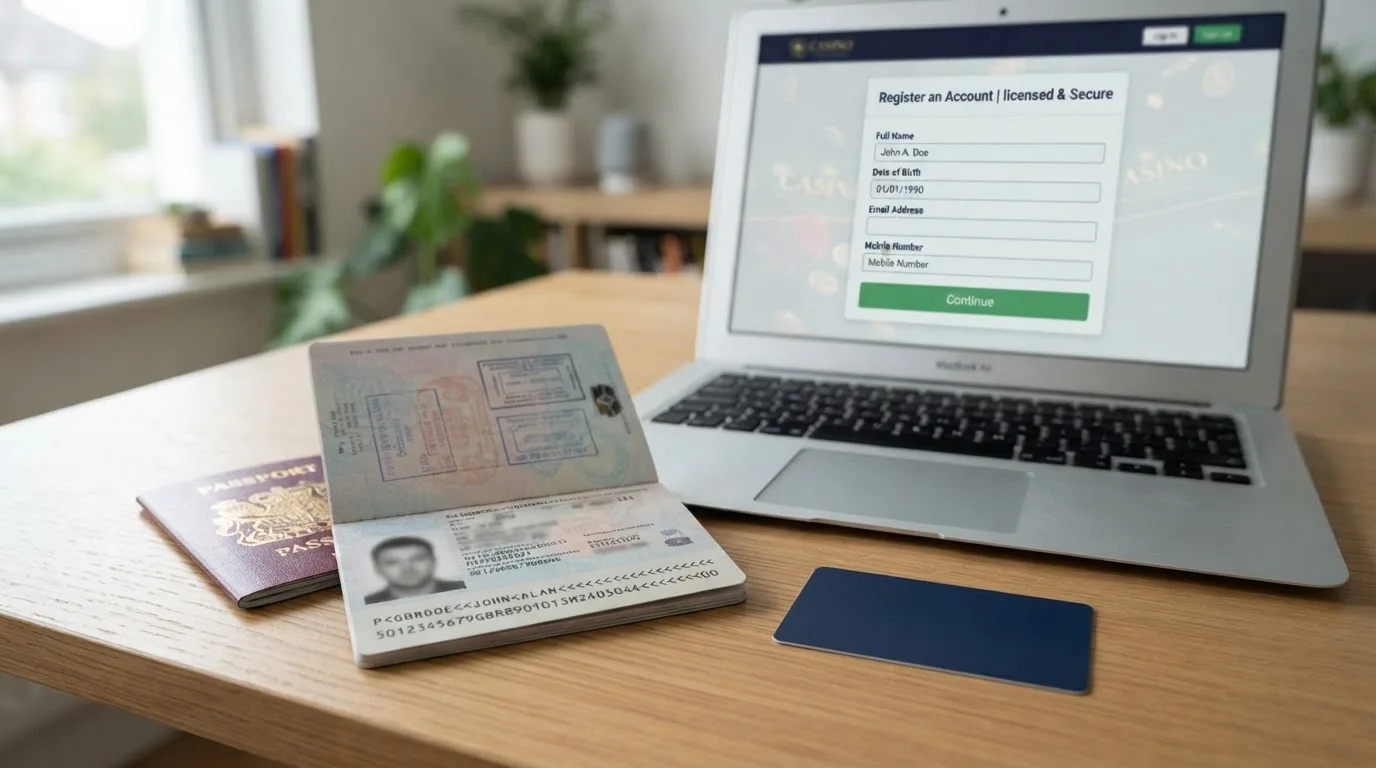
- Identity verification before first deposit. A licensed site must verify name, address and date of birth before the customer deposits or plays. That requirement has been in force since 7 May 2019. A Bitcoin Cash casino operating outside the licence does not run this check, and the comparison below returns to what that costs the player.
- Age floor of 18. No minors, regardless of payment method.
- GAMSTOP self-exclusion. Since 31 March 2020 every online licence holder must enrol customers in GAMSTOP, the national self-exclusion scheme, for periods of six months, one year or five years. The exclusion cannot be cancelled early. An offshore site is under no such duty, and a player who has self-excluded and then opens a Bitcoin Cash account on an unlicensed platform will find no register keeping them out.
- Financial vulnerability checks. From 28 February 2025 the Commission requires operators to run a vulnerability check at £150 of net deposits in any rolling 30-day window, using public data sources. The wider financial risk assessments are announced but not yet in force.
- Reality checks and spin speed. Auto-play has been banned since 31 October 2021. A spin may not complete faster than 2.5 seconds, and a slot is not allowed to disguise a loss as a win.
- Mandatory financial-limit prompt. Since 31 October 2025 a licensed operator must prompt the customer to set a deposit or loss limit before the first deposit. The prompt is not a cap; the player can decline. But it cannot be skipped.
- Credit-card ban. Since 14 April 2020 no gambling transaction may be funded by credit card, including credit cards routed through an e-wallet.
- Wagering cap and mixed-product ban. Since 19 December 2025 a wagering requirement attached to any bonus is capped at 10x the bonus amount, and mixed-product bonuses, the “bet on sport, get casino spins” construction, are banned outright.
The wagering cap is the change that matters most for the maths in this comparison. A 10x ceiling means a £100 bonus carries at most £1,000 of required turnover before withdrawal, and a £500 bonus at most £5,000. Before 19 December 2025 the same operator could attach a 40x or 65x multiple; the floor under those was the player, the ceiling was whatever the small print allowed. The cap does not abolish bonus abuse, but it puts a hard upper bound on how much a player can be asked to churn through, and it changes which offers are worth the time.
The Stakes That Are Already on the Slot
The Commission has set per-spin stake limits on online slots: £5 per game cycle for players aged 25 and over (from 9 April 2025), and £2 for those aged 18 to 24 (from 21 May 2025). A “game cycle” is the Commission’s own term for one full spin from stake to outcome; the £5 ceiling applies per cycle, not per session. A player on a licensed site cannot accelerate through the wagering requirement by staking more, because the slot will not accept it.
That limit has no equivalent offshore. A Bitcoin Cash casino outside Commission licensing will let a player stake as much as the table allows, with no age-tiered ceiling. For an older player used to the £5 ceiling, that looks like a feature rather than a restriction. The trade is that the same site is free of GAMSTOP, free of mandatory deposit-limit prompts, and free of the financial-vulnerability check that runs at £150 of net deposits. What looks like a freedom is the absence of a protection.
What Bitcoin Cash Actually Is
Bitcoin Cash (BCH) is a cryptocurrency that forked from Bitcoin on 1 August 2017 at block height 478,559. Holders of Bitcoin at the moment of the fork received an equal amount of BCH, so the new chain began with a pre-distributed user base. The fork was contentious: mining-hardware manufacturer Bitmain and the Bitcoin advocate Roger Ver were prominent supporters of the larger-block approach that Bitcoin Cash embodied, and ViaBTC, the mining pool that proposed the name “Bitcoin Cash”, was one of the loudest voices for the split.
The technical differences from Bitcoin are mostly about throughput. Bitcoin Cash inherited Bitcoin’s SHA-256 proof-of-work algorithm and roughly ten-minute average block time, but in 2018 its block size limit was raised to 32MB, far above Bitcoin’s 1MB. The point of the larger block was higher transaction throughput and lower per-transaction fees, the practical reason a casino cashier might prefer BCH to BTC for routine deposits. In November 2018 the chain split again, producing a separate cryptocurrency, Bitcoin SV, after a contentious upgrade; the Bitcoin Cash network that survived is the one referred to on casino cashier pages today.
The supply cap is identical to Bitcoin’s: 21 million coins. That ceiling, combined with the larger block size, has kept Bitcoin Cash positioned as a low-fee, fast-confirmation alternative to Bitcoin for retail payments, including gambling deposits on sites that accept it. The British licensing question is separate from the technical merits. The Commission’s treatment of crypto-assets as a strictly regulated payment method does not depend on which coin is used; Bitcoin Cash, Bitcoin, Ethereum and stablecoins all sit in the same regulatory bucket for licensed British operators.
What a Player Loses When the Licence Goes With It
The Commission does not just license; it regulates. A site that takes British customers without a Commission licence commits an offence under section 33 of the Gambling Act 2005, and the Commission’s response is operational: cease-and-desist notices, search-engine delisting, payment and hosting referrals. The Commission has no power to order ISP-level blocking, so the offshore site usually stays reachable. The penalty falls on the operator, not the player. No British player has been prosecuted for using an unlicensed site.
What the player loses is the protection regime that goes with the licence. The GAMSTOP register that would block them from every licensed British operator is not in force offshore. The Commission’s complaints route is closed. There is no approved alternative dispute resolution (ADR) provider for an offshore site, because ADR is a licence condition, not a market convention. The deposit-limit prompt does not run. The financial-vulnerability check does not run. The 2.5-second spin floor does not run. The £5 or £2 stake cap does not run.
That is the real shape of the trade. A player moving from a licensed British casino to a Bitcoin Cash casino is not trading one set of protections for another set; they are trading the licence protections for nothing. The cashier page may look faster, the bonuses may look bigger, the absence of an ID upload at sign-up may feel modern. None of it is regulated. The Commission does not endorse the comparison and does not arbitrate disputes on it.
The Tax Position the Marketing Page Does Not Mention
HMRC does not treat Bitcoin Cash as currency. It treats it as property. The disposals HMRC counts — selling, exchanging, spending on goods or services, including spending at a casino cashier, and gifting — are potentially subject to UK Capital Gains Tax. A player who deposits BCH at a casino, plays, and withdraws in BCH has both bought and sold a cryptoasset in the same session, and each leg is a taxable event in principle. In practice, the sums are usually small, and most individual players fall below the annual Capital Gains Tax allowance; but the rule is not optional, and a player whose BCH balance has appreciated materially across several sessions may owe CGT on the gain.
A licensed British casino paying out in sterling does not generate a CGT event for the player on the gambling outcome itself: gambling winnings are not taxable for UK players. The crypto leg is the taxable one. The fact that HMRC treats the disposal as a CGT event is not a marketing line on the offshore site that took the deposit, because the offshore site has no UK tax obligation to disclose. The player is left to declare it.
UK cryptoasset businesses, including exchanges and custodial wallet providers handling Bitcoin Cash, must register with the Financial Conduct Authority under the Money Laundering Regulations before starting business. A casino cashier that swaps BCH to sterling under a custodian arrangement may itself be caught by the registration requirement, depending on how the operation is structured. The FCA’s new authorisation regime under the Financial Services and Markets Act opens for applications on 30 September 2026; the registration regime predates it.
How the 10x Wagering Cap Changes the Bonus Maths
The bonus market for licensed British casinos is, as of 19 December 2025, capped at 10x wagering. That single number is what every bonus-cost calculation has to work against. Take a £100 bonus: the worst the small print can ask for is £1,000 of qualifying turnover before withdrawal. Take a £500 bonus: at most £5,000 of turnover. Before the cap, the same operator could write a 40x multiple and ask for £40,000 of turnover on a £1,000 bonus; that offer is no longer legal in Great Britain.
The bonus-cost arithmetic is straightforward under the cap. Required turnover equals bonus times the wagering factor. At the new 10x ceiling, a £200 bonus carries £2,000 of required turnover. Dividing by stake-per-spin gives the number of spins; multiplying by a five-second interval gives the play time in hours; multiplying the turnover by one minus the slot’s RTP gives an expected loss. The point of the cap is not to abolish the loss, since the house always has an edge. The cap compresses it: the worst bonus is now ten times the bonus itself in turnover, not forty or sixty.
What the cap does not do is change the house edge. A 96% RTP slot still keeps 4% of every pound cycled, and the wagering requirement forces the player to cycle the bonus amount many times over. A £200 bonus at 10x wagering on a 96% slot carries an expected loss of £2,000 multiplied by 4%, which is £80. The bonus is “free” only in the sense that it was credited; the turnover that releases it costs £80 of expected loss. The licence cap bounds that loss where it once ballooned; it does not eliminate it.
The bonus-cost figure is a statistical estimate, an average across many spins under the stated assumptions. It is not a guaranteed outcome. A player can win, lose more, or lose less on any individual session. What the cap does is set a ceiling on the worst case the small print can manufacture, which is the figure that mattered most before 19 December 2025.
Where the Cap Bites the Marketing Line
The bonus pages on licensed British casinos used to compete on headline multiples. A “65x wagering” line was a sales pitch, not a benefit; it sat beside an enormous headline number that the player would never convert. Under the cap, the multiple is the same for everyone, and the competition shifts to the bonus amount, the eligible games, and the contribution rate. Slots usually contribute 100% to wagering; table games often contribute less. A £200 bonus on slots at 10x wagering means £2,000 of slot turnover; the same bonus on a 20% contribution rate means £10,000 of slot turnover to clear it. The small print on contribution rates has become the new battleground.
An offshore Bitcoin Cash casino is not bound by the cap. A 40x or 50x wagering multiple is legal in jurisdictions with no equivalent ceiling, and the bonus page will carry it. The player on the offshore site is therefore paying for the absence of a ceiling with a much larger required turnover. The trade is the same shape as the licence trade: an apparent freedom that is really the absence of a rule.
The Ten Brands, and What the Register Says About Each
What follows is a comparison of ten brands taken from the Commission’s public register, downloaded on 18 September 2026. Each entry pairs the brand name with the licence holder, the licence number, and the domain status on the register. The table at the head of the section gathers them in one view; the prose underneath works through each brand in the order the register gives, with the licence, the operating company, and what the comparison establishes about the brand.
None of the ten brands advertises Bitcoin Cash acceptance in its published cashier terms, and none is listed with such support in the Commission’s public register. That is the central finding of this comparison. Every brand below is a licensed British remote casino operating under Commission oversight; none of them opens the door that search asks about. The Bitcoin Cash casino a UK player meets in search results is, almost without exception, an operator sitting outside this register.
| Brand | Licence holder | GB remote casino licence | Domain status on the register | Bitcoin Cash support |
|---|---|---|---|---|
| Casumo | Recro Limited | 061549-R-336718-002 | Active | — |
| Gala Bingo | LC International Limited | 054743-R-330863-014 | Active | — |
| MrQ | Tek Fox Ltd | 060629-R-337532-004 | Active | — |
| Virgin Games | Gamesys Operations Limited | 038905-R-319430-022 | White Label | — |
| bet365 | Hillside (UK Gaming) ENC | 055149-R-331499-004 | Active | — |
| Betway | Betway Limited | 039372-R-319367-029 | Active | — |
| Betfair | PPB Games Limited | 039411-R-319335-010 | Active | — |
| Ladbrokes | LC International Limited | 054743-R-330863-014 | Active | — |
| Midnite | Dribble Media Limited | 042647-R-321653-022 | Active | — |
| PokerStars | Stars Interactive Limited | 039108-R-319334-026 | Active | — |
The columns are read from left to right. The licence holder is the company whose account number the register pairs with the brand; the licence number is the remote casino operating licence under which the brand operates; the domain status tells the reader whether the brand is its own active entry on the register or a white-label site trading under another’s licence. The final column is empty across the table because the register does not record cryptocurrency support, and the brands themselves do not advertise Bitcoin Cash on their published cashier terms.
Casumo
Casumo appears on the register as an active domain under account 61549, Recro Limited, holding remote casino operating licence 061549-R-336718-002. The brand is one of the better-known names on the European market, with a long-running gamified loyalty structure that overlays the standard slot library. The licence is in good standing; the brand is active; the domain is not white-label, which means Casumo is its own licensee rather than a sister site of another brand on this list.
For a player comparing Bitcoin Cash options, Casumo is what the search result is not. It accepts standard British payment methods, runs GAMSTOP, prompts a deposit limit before the first deposit, and complies with the 10x wagering cap that took effect on 19 December 2025. The bonus terms are predictable; the dispute route is the Commission’s ADR; the slot ceiling is £5 per game cycle for players 25 and over and £2 for the 18-24 band. None of that is special to Casumo; it is the licence.
The verdict: Casumo is a clean answer for the player who wants the licence and accepts that Bitcoin Cash is not on the cashier page. The trade is straightforward. A player who insists on BCH deposits has to leave this register, and what they leave with is what they leave behind.
Gala Bingo
Gala Bingo trades as Gala Bingo, an active domain of account 54743, LC International Limited, holding remote casino operating licence 054743-R-330863-014. The same LC International account runs Ladbrokes, which appears later in this list. The brand’s name signals its bingo heritage; the product has broadened over time into a slot and instant-win library, but the bingo rooms remain the headline. The licence, the account, and the active status all check out on the register.
The brand’s product mix matters for the bonus-cost calculation. Bingo wagering contributions are typically weighted differently from slot contributions, and the headline bonus terms will state the contribution rate explicitly. A player moving from slots to bingo to clear wagering requirements should read the contribution table rather than assume parity. Under the 10x cap, the bonus is the same shape; the eligible product is what changes the time cost.
The verdict: Gala Bingo is for the player who wants bingo as the headline game and accepts LC International’s terms across both brands. The licence is solid; the BCH question is closed; the operator’s bingo weighting is the practical detail.
MrQ
MrQ operates as an active domain under account 60629, Tek Fox Ltd, holding remote casino operating licence 060629-R-337532-004. The brand has carved a niche in the British market as a no-wagering operator, which makes it a useful counter-example for the 10x cap conversation. A no-wagering bonus does not need the cap to bound it, because there is no wagering requirement to bound. The cap applies where there is one to apply to.
What MrQ offers the comparison is a contrast rather than a feature. Most licensed British casinos attach wagering requirements, and the cap compresses those requirements to 10x at worst. MrQ’s no-wagering structure bypasses the cap entirely by removing the requirement. A player comparing bonus maths across the licensed set should distinguish between brands that compete on bonus size with a wagering tail and brands that compete on no-wagering transparency. Both are within the licence; both are legitimate shapes the offer can take.
The verdict: MrQ is the licensed brand that most directly answers the question of what a wagering-free offer looks like under the post-cap regime. The Bitcoin Cash absence is the same as everywhere else on this list; the bonus shape is distinctive.
Virgin Games
Virgin Games trades as Virgin Games, a white-label domain of account 38905, Gamesys Operations Limited, holding remote casino operating licence 038905-R-319430-022. The white-label status on the register is the practical detail: Virgin Games is not its own licensee, and the licence number belongs to Gamesys Operations. The brand sits under Gamesys’s compliance regime, including GAMSTOP, the deposit-limit prompt, the spin-speed floor, and the 10x cap.
The product is a slot-led British casino with a recognisable brand name attached. The player comparing offer terms against MrQ or Casumo should compare them under the Gamesys umbrella rather than against a stand-alone operator. White-label brands frequently share terms across sister sites; a bonus restricted at one Gamesys licence will often be restricted across all of them.
The verdict: Virgin Games is for the player who wants the Gamesys terms with a Virgin-branded skin. The white-label status is the practical detail; the licence and the player protection regime are the same shape as the rest of the licensed set.
bet365
bet365 sits on the register as an active domain of account 55149, Hillside (UK Gaming) ENC, holding remote casino operating licence 055149-R-331499-004. The brand is one of the largest British-facing gambling operators, with a sportsbook leading the product mix and a casino product attached. The casino is not the headline, but the licence is full, and the casino terms inherit the same Commission oversight as the sportsbook.
A casino-only reader might find the casino product secondary to the sportsbook in bet365’s positioning, but the licence is the same and the player protection regime is the same. The 10x cap applies to casino bonuses here as it does everywhere else on the licensed side of the market. The financial-vulnerability check at £150 net deposits runs across the account, not just the sportsbook.
The verdict: bet365 is the brand a British player comes to for the sportsbook and stays with for the casino. The licence covers both products under the same Commission oversight. The Bitcoin Cash question does not arise.
Betway
Betway sits on the register as an active domain of account 39372, Betway Limited, holding remote casino operating licence 039372-R-319367-029. The brand is a long-standing British and European operator with a sportsbook and a casino product under the same Betway Limited account. The licence suffix “029” indicates a long licence history with multiple sequential licences on the same account; the current licence is in good standing on the register.
The casino product is slot-led with a live-dealer floor attached. The bonus terms follow the 10x cap, and the financial-vulnerability check runs at the standard £150 net-deposits threshold. The brand’s European footprint means the casino terms carry cross-jurisdiction elements; the British player is governed by the British licence, not by the European one.
The verdict: Betway is a standard-issue licensed British casino with a sportsbook attached. The licence is solid, the terms are predictable, and the Bitcoin Cash option is simply unavailable here.
Betfair
Betfair sits on the register as an active domain of account 39411, PPB Games Limited, holding remote casino operating licence 039411-R-319335-010. The brand’s exchange heritage sets it apart from the rest of this list; the casino product is the smaller side of the business, and the licence sits with PPB Games Limited rather than with the exchange operation. The casino terms follow the same Commission oversight as the rest of the licensed set.
A reader familiar with Betfair as an exchange will find the casino product smaller and more conventional than the sportsbook. The 10x cap applies; GAMSTOP applies; the deposit-limit prompt applies. Nothing about Betfair’s casino product changes the player protection regime.
The verdict: Betfair’s casino is for the player who wants the exchange elsewhere and a Commission-licensed casino here. The Bitcoin Cash option is a non-starter here; the licence question is settled.
Ladbrokes
Ladbrokes trades as Ladbrokes, an active domain of account 54743, LC International Limited, holding remote casino operating licence 054743-R-330863-014. The same LC International account runs Gala Bingo, and the licence number is identical to the one in that brand’s entry above. The brand is one of the longest-standing names on the British high street, and the online operation inherits that legacy through LC International’s licence.
A player moving between Gala Bingo and Ladbrokes is moving within one licence, which means the same AML risk assessment, the same vulnerability checks, the same dispute route. A bonus restriction at one LC International brand will frequently be mirrored at the other. The 10x cap applies across the licence, and the deposit-limit prompt runs across the licence.
The verdict: Ladbrokes is the high-street heritage name with the LC International terms. The player who wants the high-street brand under modern Commission oversight finds it here; the player who wants Bitcoin Cash does not.
Midnite
Midnite trades as Midnite, an active domain of account 42647, Dribble Media Limited, holding remote casino operating licence 042647-R-321653-022. The brand is a newer British-facing operator with a sportsbook and a casino product under the same Dribble Media account. The licence suffix “022” indicates a similarly long licence history on the account. The product is mobile-led and the brand positioning is aimed at a younger British audience than the heritage names on this list.
The 10x cap applies; GAMSTOP applies; the deposit-limit prompt runs before the first deposit. The bonus terms follow the post-cap shape. The brand’s newer market entry means the licence history is shorter than Hillside’s or LC International’s, but the licence itself is in good standing.
The verdict: Midnite is for the player who wants a newer mobile-led brand on the licensed side. The Bitcoin Cash question is closed; the licence question is settled.
PokerStars
PokerStars trades as PokerStars, an active domain of account 39108, Stars Interactive Limited, holding remote casino operating licence 039108-R-319334-026. The .uk domain distinguishes it from the .com operation that serves other jurisdictions; the British player transacts on the UK-facing domain, which sits under the UK licence. The brand’s poker heritage leads the product mix, with a casino product attached under the same Stars Interactive account.
The casino product is slot-led with a live-dealer floor attached. The 10x cap applies to casino bonuses; the poker product carries its own bonus structure that does not fall under the casino cap. A player who splits time between poker and slots will see two different bonus regimes, both inside the same Commission licence.
The verdict: PokerStars is for the player who wants poker as the headline and a casino under the same UK licence. The .uk domain is the marker that the British player is on the British-regulated product. The Bitcoin Cash question is closed.
How the Comparison Lands for the Reader
Three points hold across all ten brands. First, every brand reviewed is a Commission licence holder whose domain sits on the public register, and the licence numbers and account IDs reproduce what the register shows on 18 September 2026. Second, none of the ten brands advertises Bitcoin Cash support in its published cashier terms, and the register does not record cryptocurrency support as a domain field; the absence is consistent across the licensed set. Third, the 10x wagering cap of 19 December 2025 applies across the licensed set, and the player protection regime is uniform: GAMSTOP, the deposit-limit prompt, the £150 vulnerability check, the £5/£2 stake ceiling, the 2.5-second spin floor, and the ADR route.
The reader who came to this page looking for a Bitcoin Cash casino has not found one. What the reader has found is the licensed British alternative, and the comparison has done its job by showing what the alternative looks like in concrete terms. The Bitcoin Cash option, where it exists in the search results, sits outside this register, and the player protection regime on that side is the absence of a regime.
The practical next step for a player is to verify any licence number published on an offshore Bitcoin Cash casino against the Commission’s register. If the licence number does not appear, the site is unlicensed for British purposes; if it appears but the brand name does not match the domain, the licence is being misused. Either way, the comparison is closed: the site is not on this register, the brand is not one of these ten, and the player protection regime does not apply.
Where the Calculation Sits Inside This Comparison
The bonus-cost calculation under the 10x cap is a band, not a single figure. The lower bound is a small bonus on a high-RTP slot with a low stake-per-spin; the upper bound is a large bonus on a lower-RTP slot with a higher stake-per-spin. The arithmetic is the same in shape: turnover equals bonus times 10, spins equal turnover divided by stake-per-spin, time equals spins multiplied by the five-second spin floor divided by 3,600. The expected loss equals turnover multiplied by one minus RTP.
For a £100 bonus on a 96% slot at £1 stake per spin, turnover is £1,000, spins are 1,000, and time is roughly 1.4 hours at the 2.5-second spin floor. The expected loss is £40, which is 40% of the bonus amount itself. For a £500 bonus on a 94% slot at £2 stake per spin, turnover is £5,000, spins are 2,500, and time is about 3.5 hours. The expected loss is £300, which is 60% of the bonus. The cap bounds the worst case at 10x turnover; it does not bound the expected loss, which depends on the slot’s RTP.
The band is what the calculation produces. The conclusion is that, under the cap, a player clearing a bonus at 10x wagering on a typical slot is paying an expected loss equal to a substantial fraction of the bonus amount, and the time cost runs from a few hours for a small bonus to several hours for a large one. The calculation is an estimate; no individual session will produce the expected loss exactly. What the cap has changed is the ceiling on turnover, which was the multiplier that mattered most before 19 December 2025.
The Limits of What This Comparison Can Settle
A comparison built on the public register has a defined limit. The register tells the reader whether a brand is licensed, who the licence holder is, what licence number applies, and what domain status the brand carries. It does not tell the reader which cryptocurrencies the cashier accepts, because cryptocurrency support is not a register field. The licensed brands in this comparison are not advertising Bitcoin Cash on the Commission’s data; they are also not advertising Bitcoin Cash on their own published cashier terms, as of the data available to this page.
The offshore brands that do advertise Bitcoin Cash acceptance are not on the register by definition, because accepting a crypto-asset payment method without going through the Licence Condition 12.1.1 review is not a path to a Commission licence. The comparison cannot list them as licensed alternatives, because they are not licensed alternatives. What it can do is name the trade: a Bitcoin Cash deposit on an offshore site, with no GAMSTOP cover, no ADR route, no Commission oversight, and a CGT event on every disposal under HMRC’s treatment of cryptoassets.
The comparison closes here, on the trade. The licensed British side delivers the protection regime, the predictable bonus terms under the 10x cap, and the closed dispute route. The Bitcoin Cash side delivers the deposit method, the absence of identity checking, and the absence of everything else the licence brings. A player choosing between them is choosing between the regime and the method, and the comparison has done its job when both sides of that choice are on the page.
What to Do With a Licence Number Found on a Bitcoin Cash Casino Page
The verification route is short. The Commission’s public register is searchable online and downloadable as a CSV or Excel file. Take the licence number the offshore site publishes; paste it into the register’s search field. If it appears, the licence is genuine, and the question is whether the brand name on the offshore site matches the domain on the register. If the licence number does not appear, the site is unlicensed for British purposes, and the section 33 offence is the operator’s, not the player’s.
The licence number’s shape is fixed: six-digit account number, the letter R, a licence sequence, a suffix. Any deviation from that shape — letters where digits should sit, a missing R, an absent suffix — is a sign of fabrication. The Bitcoin Cash casino page that publishes a licence number in an unfamiliar shape is one whose terms the player should not trust at face value.
The brand name is the second check. A licence held by Recro Limited does not extend to an unrelated domain claiming Recro’s licence. The register pairs each licence with a list of authorised domains, and a brand outside that list is not authorised to operate under that licence. The Commission publishes the pairing explicitly; the player can verify it in seconds.
The Slot Library Is Not the Difference
A common misreading of a comparison like this treats the slot library as the variable that matters. It is not, on the British licensed side. Every Commission-licensed casino runs against the same slot ceiling (£5 per game cycle for players 25 and over, £2 for 18-24), the same spin floor (2.5 seconds), the same auto-play ban, and the same loss-disguised-as-win ban. The slot library differs across brands; the regulatory frame does not. A player moving between Casumo, MrQ, Betway and PokerStars sees different games and different bonus terms; the underlying slot rules are the same.
The offshore Bitcoin Cash casino sits outside that frame. The slot library may be larger, the stakes higher, the spin faster. None of those are features the Commission endorses, and none of them carry the protection regime attached to the licence. A player who reads the slot library as the variable is reading the wrong column.
What Has Changed and What Has Not
Two dates matter for the current shape of the British market. The first is 19 December 2025, when the 10x wagering cap came into force and mixed-product bonuses were banned. The second is 28 February 2025, when the financial-vulnerability check at £150 net deposits in a rolling 30-day window took effect. Both are now part of the licence condition set, and both apply across the ten brands in this comparison.
What has not changed is the basic shape of the licence. The Gambling Act 2005 still covers Great Britain; the Gambling (Licensing and Advertising) Act 2014 still requires any operator taking British customers to hold a Commission licence; the public register is still the test of whether a brand is licensed. The Commission’s treatment of crypto-assets as a high-risk AML payment method is unchanged, and the Licence Condition 12.1.1 review remains the path a Commission-licensed operator would have to walk before adding Bitcoin Cash.
What has changed on the tax side is the FCA’s new authorisation regime under the Financial Services and Markets Act, which opens for applications on 30 September 2026. Cryptoasset businesses, including those handling Bitcoin Cash, that operate in the UK must register with the FCA under the Money Laundering Regulations before starting business, and the new regime adds an authorisation layer on top of the registration. A player transacting with a Bitcoin Cash casino should expect the operator’s crypto leg to be subject to one or both layers of FCA oversight if the operator is UK-based, and to neither if it is not.
Remote Gaming Duty, the tax operators pay on gross gaming yield, rose from 21% to 40% on 1 April 2026. The rise affects the operator’s economics, not the player’s tax position. Players do not pay tax on gambling winnings in the UK; operators pay Remote Gaming Duty. The rate change is a fact about the licensed side of the market, and it does not apply to offshore Bitcoin Cash casinos, which do not pay UK Remote Gaming Duty at all.
What an Honest Comparison Has to Admit
This comparison cannot recommend a Bitcoin Cash casino, because none of the ten licensed British operators in this comparison accepts Bitcoin Cash. It can describe what a player stands to lose by going outside the register, and it can describe what the licensed alternative looks like in concrete terms. The recommendation shape is closed by the data: a Bitcoin Cash casino serving British players, by the Commission’s own rules, sits outside the licensing regime the comparison is built on.
The honest move is to name that limit. A reader who came to this page to find a Bitcoin Cash casino to play at has not found one. A reader who came to the page to understand why that is, and what the licensed alternative looks like, has. The comparison closes on that distinction.
Closing the Loop
The Gambling Commission’s public register, downloaded on 18 September 2026, is the source for every licence number, account ID, and domain status in this comparison. The Commission’s view of crypto-assets as a strictly regulated payment type is the reason no licensed British casino in this set accepts Bitcoin Cash. The 19 December 2025 cap on wagering requirements at 10x is the rule that bounds the worst bonus maths on the licensed side. The 28 February 2025 financial-vulnerability check at £150 net deposits is the rule that introduces the first automated intervention on the licensed side. The GAMSTOP requirement is the rule that gives self-exclusion teeth on the licensed side and none offshore.
The reader who acts on this comparison has the verification route. The reader who does not has, at minimum, an honest account of why a Bitcoin Cash casino for British players is not what the search results suggest it is.
Frequently Asked Questions
Does any Gambling Commission-licensed casino currently accept Bitcoin Cash deposits?
No Commission-licensed casino in this comparison advertises Bitcoin Cash support, and the register does not record cryptocurrency acceptance as a domain field. The Commission treats crypto-assets as a high-risk AML payment method, and any licensed operator adding one would have to complete a Licence Condition 12.1.1 review first. The Bitcoin Cash casino a UK player meets in search results is, almost without exception, an operator sitting outside the register.
What happens to identity verification at a Bitcoin Cash casino operating outside UK licensing?
A casino outside Commission licensing is not bound by the 7 May 2019 requirement to verify name, address and date of birth before first deposit. Many offshore Bitcoin Cash casinos run minimal or no identity checks, accepting deposits from a blockchain wallet without a KYC process. The trade is that the player protection regime attached to the verification — the deposit-limit prompt, the vulnerability check, the GAMSTOP register — does not run either.
Is a casino accepting Bitcoin Cash automatically unlicensed for British players?
Not automatically, but in practice yes. The Commission’s licensing regime requires any operator taking British customers to hold a Commission licence, and a Bitcoin Cash cashier would require a Licence Condition 12.1.1 review before going live. No operator in this comparison has gone through that review for Bitcoin Cash. A Bitcoin Cash casino serving British players is, by the structure of the regime, an offshore operator, and the section 33 offence is the operator’s, not the player’s.
What self-exclusion cover does a player lose by using a Bitcoin Cash-only casino?
A player on a Bitcoin Cash casino outside the Commission regime loses GAMSTOP cover entirely. The national self-exclusion register, which would block the player from every licensed British operator for six months, one year or five years, does not extend to offshore sites. A player who has self-excluded and then opens a BCH account on an unlicensed platform will find no register keeping them out. The exclusion is binding only on the licensed side.
How does funding an account with Bitcoin Cash differ from a standard UK bank transfer?
A Bitcoin Cash deposit moves from a blockchain wallet to the casino’s wallet, with on-chain confirmation rather than a Faster Payments or BACS transfer. The transaction is irreversible once confirmed, which means a mistaken deposit cannot be recalled by the bank. The casino’s wallet address is the only practical route to a refund, and an offshore operator has no Commission obligation to refund. A UK bank transfer, by contrast, runs inside the Faster Payments scheme with consumer protections attached, and the receiving operator is bound by the Commission’s dispute resolution rules.
Why do most UK-licensed casinos avoid accepting cryptocurrencies such as Bitcoin Cash?
The Commission’s treatment of crypto-assets as a high-risk AML payment method, the Licence Condition 12.1.1 review requirement, the FCA registration regime for cryptoasset businesses, and the HMRC treatment of crypto disposals as CGT events all combine to make crypto acceptance operationally heavier than fiat acceptance for a licensed British operator. The bonus terms and the player protection regime also have to be re-engineered around a payment method that does not run through the standard UK banking rails. The cost-benefit calculation has not favoured adding crypto support on the licensed side, and the result is a market where Bitcoin Cash acceptance sits offshore by default.
Published by the onlinebingoguideuk team.