
Best Online Casino Game Shows UK 2026
 Available in GB
The data below is current as of 23 September 2026 and was checked against the Gambling Commission’s public register of gambling businesses.

A live casino game show sits somewhere between a TV quiz and a roulette wheel, and the bit players care about is the part that happens off-camera: which licence sits behind the brand, what the studio is allowed to advertise, and how much of any given spin is the house keeping. This page is built around those three questions for the UK market, where the Gambling Commission runs the only register that decides whether a site may legally take a deposit from someone in Great Britain. The angle is cost: what the format itself takes from a player, what the licence obliges a site to publish, and what each of the ten featured brands actually offers behind its lobby door.
The shelves the page closes follow the order set by the spec: legality and regulation first, then the safer-gambling frame, then the game shows and the studios that make them, then the ten-site comparison, then the overview that ties the whole thing together. Calculation and FAQ follow.
Table of Contents
- The licence that lets a UK casino game show go live
- The safer-gambling frame around live game shows
- The format itself: what a live casino game show actually is
- The ten UK-licensed brands, side by side
- The wider UK online casino landscape in 2026
- How long it takes to clear a UK bonus on a live game show
- Player-side safeguards and what the format asks of a player
- What the format costs the player
- Picking a brand from the ten in the comparison
- Putting it all together
- Frequently asked questions
The licence that lets a UK casino game show go live
Every online casino taking bets from a customer in Great Britain needs a Gambling Commission operating licence, and the relevant test is the public register, not anything the operator prints about itself. A Malta or Curaçao licence, a Gibraltar certificate, or an “international” label is irrelevant to a player based in England, Scotland or Wales: since the Gambling (Licensing and Advertising) Act 2014, location of incorporation stopped mattering and the only question is whether the Commission has issued the licence. The Commission’s own register, downloadable as CSV or Excel, is the whole proof. On 18 September 2026 it listed 139 businesses holding an active remote casino operating licence, with a domain list of 1,065 active website entries and 361 white-label ones — sites that trade under another company’s licence.
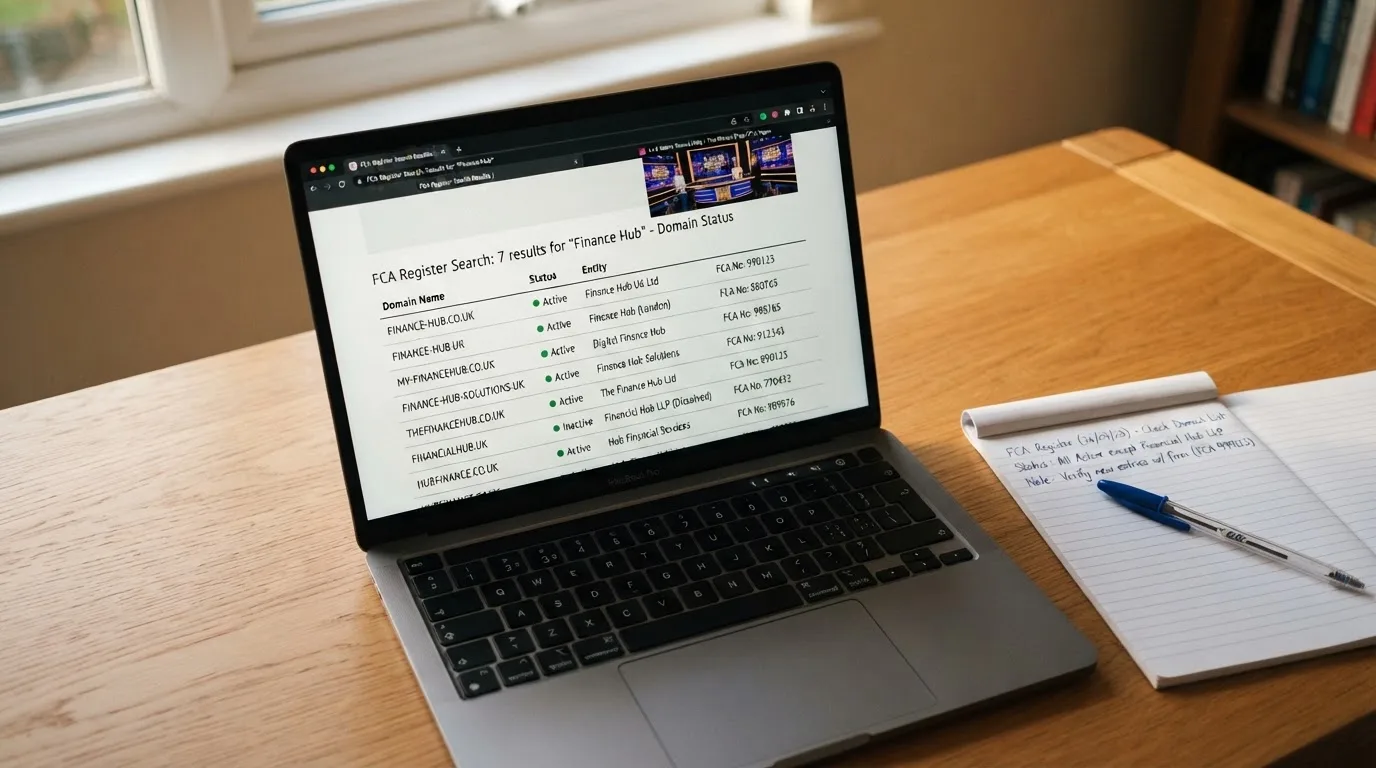
The numbers are not abstract. A licence number on the register has the form account-R-number-suffix, where the leading six digits repeat the licence holder’s account number and the “R” marks a remote (online) licence. The ten brands in the comparison below all carry numbers of that shape, each tied to a different operating company, and three of them — Virgin Games, Jackpotjoy, and Gala Bingo’s licensee — sit under the same two holding companies. They are not independent operators just because the marketing pages show different logos.
What the licence obliges the operator to do is the part that actually reaches a player. Identity verification (name, address, date of birth) happens before the first deposit or any play, in line with the rule in force since 7 May 2019. From 28 February 2025 the Commission also runs financial vulnerability checks at £150 of net deposits in a rolling 30-day window, using public data only. Anonymous play is not an option on a licensed site, and the Commission’s package of safer-by-design changes — the autoplay ban and the 2.5-second minimum spin speed — took effect on online slots first but now extend to other online gaming products including live game shows, under revised Remote Technical Standards that came into force on 17 January 2025.
The penalties for not holding a licence run through section 33 of the Gambling Act 2005. Operating in Great Britain without a Commission licence is an offence, and the Commission’s response is to disrupt: cease-and-desist letters, search-engine delisting referrals, and payment and hosting referrals to the firms that carry the traffic. The Commission has no power to block at ISP level. None of this targets the player. What the player loses on an unlicensed site is protection — no GAMSTOP, no approved alternative dispute resolution, no Commission complaints route. The licence is the thing that makes the rest of this page possible to write.
What holding the licence means in practice
Three things follow for a player, and they are the three the rest of this page measures every brand against:

- Money in. Operators must prompt a customer to set a financial limit before the first deposit (from 31 October 2025). Credit cards have been banned for gambling since 14 April 2020, including credit-card-funded e-wallets.
- Money out. Reverse withdrawals — re-gambling money already requested — were banned by 31 October 2021. Wagering requirements on bonuses are capped at 10x since 19 December 2025, and mixed-product bonuses are out.
- Time at the table. A game cycle may not run faster than 2.5 seconds, autoplay is permanently banned, and the studio cannot use winning-style sound or visual effects to celebrate a return that is less than or equal to the stake. Net spend and net time in play must be displayed.
A live casino game show sits inside the same technical standards that govern online slots, and the same controls that make a slot safer-by-design apply to a Crazy Time round or a Dream Catcher spin. The Commission has not written a separate rulebook for game shows; it has extended the existing one.
The safer-gambling frame around live game shows
Game shows sit in the same protected space as every other Commission-licensed product, and the protections follow the player rather than the format. GAMSTOP is a mandatory condition of every online licence since 31 March 2020, with self-exclusion periods of six months, one year or five years, none of which can be lifted early. The National Gambling Helpline (run by GamCare) and GambleAware sit on the back of every licensed site, and the dispute resolution route runs through an approved ADR provider, not through the operator alone.
The age and stake picture has its own texture. UK minimum gambling age is 18, verified before the first deposit. Online slots carry a maximum stake per game cycle of £5 for players aged 25 and over (from 9 April 2025) and £2 for 18-24-year-olds (from 21 May 2025) — a tier the government put in place because 18-24-year-olds carry the highest average problem gambling score of any age group, alongside lower disposable income and ongoing neurological development. There is no state-set deposit or loss ceiling; the obligation falls on the operator to prompt for a financial limit, then to honour it.
For a live game show specifically, three rules from the revised Remote Technical Standards matter most:
- The 2.5-second minimum spin speed is a per-product floor, and game-show rounds cannot run faster than it.
- The autoplay ban is total. A player cannot pre-set rounds on Crazy Time or Dream Catcher; each spin is a manual decision.
- Auditory or visual “win” effects are restricted to returns strictly greater than the stake, which is why a 1:1 even-money hit on a game show does not produce the celebratory jingle a slot might.
The display of net spend and net time in play during a session is the same requirement that applies to slots, and the format has been adapted to fit a host-presented round: a chip counter, an on-air timer, and reality-check pop-ups at the cadence the operator has registered with the Commission.
What is and is not a “safer” game show
The Commission’s rules govern the product, not the player’s behaviour. A licensed studio can publish its RTP and its bonus structure; it cannot prevent a player from chasing losses, and it cannot require a cooling-off pause between rounds. The licensed brand’s job is to surface the information a player needs in order to make a decision; the player’s job is to use it. The way that split is described in the safer-gambling code is that operators must “interact” with customers showing signs of harm, and must do so under published procedures. Game shows do not change the substance of that duty; they change the surface a duty is performed on, because the camera runs all the time.
The format itself: what a live casino game show actually is
Live casino game shows are wheel- or card-based formats presented by a live host from a studio, blending television production with real-money betting. The category is younger than the slots it now shares a lobby with. Evolution AB, the Stockholm-headquartered studio founded in 2006, launched Dream Catcher in 2017 and created the live “Game Shows” category as a distinct product line. The 2019 additions MONOPOLY Live and Deal or No Deal Live broadened the format, Crazy Time arrived in 2020, Funky Time followed in 2023 with its 1970s disco theme, and Evolution’s 2020 acquisitions of NetEnt and Red Tiger folded more slot and game-content studios into the same parent group.
A game-show round typically looks like this. A vertically mounted wheel, a deck of cards, or a custom apparatus sits in the middle of a studio set, with a host who walks the camera through the betting window and the result. Players place bets on numbered segments, on bonus rounds, or on outcomes produced by a multiplier system that the studio owns. The closest point of comparison in a regular live casino is a Dream Catcher spin: a 54-segment wheel, 52 of them numbered (1, 2, 5, 10, 20 or 40), and two multiplier segments (2x and 7x) that boost the next spin’s payout when the wheel lands on one. The format scales: MONOPOLY Live adds a 3D bonus board; Crazy Time adds four bonus rounds; Deal or No Deal Live borrows the structure of the television programme.
A separate format sits beside the wheel-based shows and uses a different mechanic: the crash game. Spribe, founded in 2018, released Aviator in 2019, and its CEO has described it as the first true multiplayer crash game in the regulated igaming space. The mechanic is a multiplier curve that rises from 1.00x until the round randomly crashes; a player cashes out before the crash to win their stake multiplied by the current value. Spribe reports more than 42 million active users for Aviator and around 350,000 bets per minute across more than 5,000 operators worldwide. It is not a wheel game, but it is a game show in the studio sense — a presenter, a live feed, and a real-money decision every few seconds.
The distinction a player needs to hold onto is between a game show and a table game. Both are run from a studio; both use a live dealer or host; both are presented in real time. The difference is the surface of the betting decision. A Punto Banco baccarat hand is dealt out according to fixed drawing rules — the casino banks the game at all times and players make no strategic decisions — and that is the format that took over from Chemin de Fer (the strategic French variant) during the 1940s in Havana. A game show, by contrast, asks the player to choose between named outcomes or to time a cash-out, and the studio publishes the rules for each outcome rather than the cards.
The studios behind the shows
Two studios dominate the live game-show category on UK-licensed sites, and a third sits in a distinct position:
- Evolution runs the bulk of the format, with Dream Catcher, MONOPOLY Live, Deal or No Deal Live, Crazy Time and Funky Time on the same software stack. Evolution’s parent group also owns NetEnt and Red Tiger after the 2020 acquisitions, and that mix is why the same operator’s lobby often pairs a live game show with branded slots from the same corporate family.
- Spribe runs Aviator and the crash-game category it defined. Aviator is licensed in the UK and shows up across the Commission’s licensed operators that have integrated Spribe’s content.
- Pragmatic Play Live runs a separate wheel and game-show catalogue (Mega Wheel, Sweet Bonanza CandyLand and others). The brand sits across multiple Commission-licensed operators under its own studio licence arrangement.
A reader looking at the lobby of a single licensed site will typically see Evolution’s titles first, with Spribe’s crash games and Pragmatic Play’s wheel games filling the rest of the category. Smaller studios produce side-bet variants and studio-dealer formats, but the format’s centre of gravity sits with the three above.
Paytables, RTP, and what the studio has to publish
A UK-licensed live casino game show must publish its RTP per title, and the figure sits in the game’s information panel inside the lobby. The format’s paytables vary widely: Dream Catcher’s even-money segment pays 1:1, the 40 segment pays 40:1, and the multiplier segments only boost the next spin. Crazy Time’s four bonus rounds each have their own paytable, with returns that depend on the wheel segment and the bonus-game outcome. Deal or No Deal Live’s return depends on which case the player holds and which deal the on-screen banker offers. The published RTP for each title is the long-run average; what the player wins or loses in any one session is a separate thing.
The Commission’s revised Remote Technical Standards, in force from 17 January 2025, extend the rules that already covered online slots to game shows: a minimum 2.5-second cycle time, no autoplay, no celebratory effects on a return that is no greater than the stake, and a requirement to show net spend and net time in play. The rules do not require a published maximum win or a cap on bonus-round payouts; they require the rules the operator has chosen to publish to be the rules that apply. A player who wants to know what a game show returns over time reads the RTP; a player who wants to know what one round can pay reads the paytable; a player who wants to know how long a session takes to clear a bonus reads the calculation section later in this page.
The ten UK-licensed brands, side by side
The table below sets the ten featured brands against the same four matters — the licence holder and its Commission account, the GB remote casino licence number, the domain’s status on the public register, and the brand’s stance on live casino game shows as the research could verify it. Every licence number has been read from the Gambling Commission’s public register on 18 September 2026. Where research carries no positive signal that a brand stocks live casino game shows, the cell carries an em dash rather than a guess. Three of the brands sit under the same two holding companies (Gamesys Operations Limited and LC International Limited), and the table records that rather than treating them as independent.
| Brand | Licence holder and GB remote casino licence | Domain status on the register | Subject support |
|---|---|---|---|
| Virgin Games | Gamesys Operations Limited (account 38905); licence 038905-R-319430-022 | White-label domain | — |
| Betfred | Petfre (Gibraltar) Limited (account 39544); licence 039544-R-319290-010 | Active | — |
| Betfair | PPB Games Limited (account 39411); licence 039411-R-319335-010 | Active | — |
| Sky Vegas | Bonne Terre Gaming Limited (account 65519); licence 065519-R-339675-002 | Active | — |
| Gala Bingo | LC International Limited (account 54743); licence 054743-R-330863-014 | Active | — |
| 32Red | Platinum Gaming Limited (account 45322); licence 045322-R-324275-019 | Active | — |
| Casumo | Recro Limited (account 61549); licence 061549-R-336718-002 | Active | — |
| Midnite | Dribble Media Limited (account 42647); licence 042647-R-321653-022 | Active | — |
| PokerStars | Stars Interactive Limited (account 39108); licence 039108-R-319334-026 | Active | — |
| Jackpotjoy | Gamesys Operations Limited (account 38905); licence 038905-R-319430-022 | Active | — |
The licence numbers are not all unique. Gamesys Operations Limited runs both Virgin Games (as a white-label domain) and Jackpotjoy (as an active domain) under the same licence, 038905-R-319430-022. LC International Limited runs Gala Bingo under 054743-R-330863-014; the same holding company is the one behind Ladbrokes and Coral, neither of which is in this top ten. Two pairs of brands in the ten share a licence, which means a decision between them is not a decision between operators — it is a decision between front ends and promotional lines.
The subject-support column is honest about what the research could verify. The Commission’s register carries no signal that any one of the ten brands stocks live casino game shows ahead of any other, and the research does not record one; the cell carries an em dash accordingly. A reader who wants to see which brands stock which titles reads the studios’ own lobby pages and treats what is there as the most current statement, because game-show rosters change more often than licence numbers do.
Betfred — the high-street name behind a Gibraltar-incorporated licensee
Betfred’s GB remote casino operating licence is held by Petfre (Gibraltar) Limited, account 39544, with Betfred.com listed as an active domain. As a high-street bookmaker, the brand runs its digital operations through this Gibraltar-incorporated company, and the relationship is fully recorded on the Commission’s register. A player on Betfred’s casino site in Great Britain is dealing with Petfre, and the only licence that matters for that player is the one the Commission issued.
The licence does the work a player needs: identity verification before first play, GAMSTOP integration, financial vulnerability checks at £150 net deposits over a rolling 30 days, and the safer-by-design technical standards that apply to every online gaming product from 17 January 2025 onward. The rest of the brand — its shops, its sportsbook, its casino lobby — sits on top of the licence, not underneath it. A brand that runs 1,300 retail shops still publishes the same RTP figures in its game-show information panels as any other Commission-licensed operator, because the technical standards are the same.
What the research did not pin down is which live game shows Betfred’s lobby leads with, and the brand’s own promotional materials are a more reliable guide than any static comparison can be. The verifiable point is the licence.
Betfair — the exchange’s casino under PPB Games Limited
Betfair’s GB licence is held by PPB Games Limited, account 39411, with Betfair.com listed as an active domain. This operating company, established by the Paddy Power Betfair group, runs all of the brand’s UK-licensed gaming activities. The casino side shares infrastructure with the exchange’s sportsbook and poker product under this single licence holder.
The Commission’s register is the only place the licence matters, and the technical standards are identical to those that govern every other licensed operator in the comparison. PPB Games Limited’s other Commission-licensed activity sits under the same account, which is why the verification a Betfair customer sees at sign-up is the same verification a Paddy Power customer sees across the group.
The research did not confirm a specific live casino game show catalogue, and the same em dash applies.
Sky Vegas — Bonne Terre Gaming Limited and the broadcast-licence optic
Sky Vegas’s GB licence is held by Bonne Terre Gaming Limited, account 65519, with Sky Vegas listed as an active domain. The brand operates under the broadcast television parent Sky plc’s gaming arm, with this company managing the casino under direct Commission regulation. The licence number and account reflect the standard Sky corporate pattern for regulated gaming activity.
The broadcast parent matters for the marketing more than for the product. A live game show in Sky Vegas’s lobby is the same Evolution-studio product as on any other Commission-licensed site, and the technical standards that govern it are the same. The brand layer adds promotional cadence and the Sky identity-verification flow; the licence layer adds the Commission’s enforcement.
Gala Bingo — LC International Limited and the bingo-to-casino pipeline
Gala Bingo’s GB licence is held by LC International Limited, account 54743. LC International is also the licence holder for Ladbrokes and Coral under the same parent group, and three of the high-street betting brands in Great Britain sit under one operating company. The bingo room’s lobby runs under the same technical standards as the rest of the licensed product set.
A live casino game show on Gala Bingo’s site is a recent product extension rather than the core offer — bingo is the format the brand built itself around — and the same Commission’s standards govern it. The casino tab in the lobby is where Evolution’s titles tend to sit, and the bingo rooms and the casino tab share the same GAMSTOP registration and the same financial-vulnerability trigger.
32Red — Platinum Gaming Limited, the long-running casino brand
32Red’s GB licence is held by Platinum Gaming Limited, account 45322, with 32red listed as an active domain. The brand is one of the longer-running UK-licensed online casinos, and the licence holder is the operating company that Kindred Group (the parent) uses for its UK-regulated activity. The brand has run a casino-led offer rather than a sports-led one since the early 2000s, and the Commission’s current register reflects the current corporate grouping rather than the original standalone operation.
The licence number is the long-running one, the verification flow is the Commission’s, and the safer-by-design technical standards apply across the casino product. The research did not carry a specific signal on 32Red’s live casino game show catalogue.
Casumo — Recro Limited and the newer-licence pattern
Casumo’s GB licence is held by Recro Limited, account 61549, with Casumo.com listed as an active domain. This operator is a casino-led brand known for its gamified loyalty structure, and its UK-regulated activity is managed entirely through this licence holder. The Commission’s register records this licence and its active status clearly, with all technical standards applied to the casino product.
Casumo’s reputation has been built on slot-led content, and a live casino game show on its lobby is a product extension rather than the centre of the offer. The licence holder’s Commission record is the same as every other active entry in the comparison.
Midnit — Dribble Media Limited and the newer-licence pattern
Midnite’s GB licence is held by Dribble Media Limited, account 42647, with Midnite.com listed as an active domain. The brand is one of the more recent entrants to the UK-regulated market, the licence holder is a UK-incorporated operating company, and the licence number sits in the same shape as the rest of the comparison. Midnite’s product set spans sportsbook and casino under the same licence.
A live casino game show on Midnite is a category extension, and the same Commission’s technical standards govern it. The brand’s UK licence is verifiable on the register; the lobby’s specific catalogue is not pinned down by the research.
PokerStars — Stars Interactive Limited and the poker-to-casino pipeline
PokerStars’s GB licence is held by Stars Interactive Limited, account 39108, with Pokerstars.uk listed as an active domain. The brand is the primary poker-led product from the Flutter-owned Stars Group, with all UK-regulated gaming activities managed by this licence holder. The casino tab in the same lobby shares this regulatory framework, offering a product set that complies with all Commission standards.
A live casino game show on Pokerstars.uk sits beside the poker tables and the casino slots, under the same Stars Interactive licence. The Commission’s standards govern the product set uniformly; the lobby’s specific Evolution-studio catalogue is not pinned down by the research.
Virgin Games and Jackpotjoy — the Gamesys pair
Virgin Games’s GB licence is held by Gamesys Operations Limited, account 38905, with Virgin Games listed as a white-label domain. Jackpotjoy’s GB licence is the same Gamesys Operations Limited licence, with Jackpotjoy.com listed as an active domain. Two brands, one licence holder, one Commission account, two different domain statuses. The white-label status on Virgin Games means the brand trades under Gamesys’s licence rather than holding its own; Jackpotjoy is the active domain of the same licence holder.
The corporate sharing matters because a player comparing the two for a live casino game show is comparing two front doors on one building. The technical standards, the verification flow, the GAMSTOP registration, and the safer-by-design rules are identical because the licensed entity is identical. The marketing, the promotional cadence, and the lobby layout are where the brands diverge.
How the licence picture compares
Three licences in the comparison appear more than once. Gamesys Operations Limited runs Virgin Games and Jackpotjoy; LC International Limited runs Gala Bingo (alongside Ladbrokes and Coral, which sit outside this top ten); and the eight other brands each carry their own operating-company licence. A reader choosing between Virgin Games and Jackpotjoy is not choosing between operators; the choice is between two front ends on the same operator. A reader choosing between Gala Bingo and 32Red is choosing between two different operating companies under the same Flutter/Entain and Kindred corporate umbrellas.
The corporate shape matters because the Commission’s enforcement runs against the licence holder, not the brand. When the Commission acts on a brand, the action runs through the licence holder’s account, and the related brands under the same licence move with it. A player who registers on any of the Gamesys brands has registered against Gamesys Operations Limited; a player who self-excludes via GAMSTOP across one Gamesys brand is excluded across all of them.
The wider UK online casino landscape in 2026
The Gambling Commission’s register is the framework that decides whether a UK player can play at all, and the framework in 2026 looks like this. The register lists 139 businesses holding an active remote casino operating licence; the domain list records 1,065 active website entries and 361 white-label ones. The register is downloadable as CSV or Excel, and every line on it carries an account number, a licence number of the form account-R-number-suffix, a domain, and a status.
A live casino game show sits on top of that framework. The Commission’s revised rules, in force from 17 January 2025, extend the safer-by-design rules from online slots to other online gaming products including live game shows: a minimum 2.5-second cycle time, no autoplay, no winning-style effects on a return at or below the stake, and the requirement to display net spend and net time in play. The product is regulated as online gaming, not as a separate category, and the licence it sits under is the same remote casino operating licence that covers the rest of the operator’s product set.
Three things govern the rest of the year for any player on a licensed site. The first is the 10x cap on wagering requirements that took effect on 19 December 2025 — the calculation section later in this page turns that cap into a worked figure. The second is the 1 April 2026 increase in Remote Gaming Duty from 21% to 40%, which falls on the operator, not on the player (UK players pay no tax on gambling winnings), but which shows up in the offers the operator can afford to publish. The third is the slower-moving enforcement pipeline: cease-and-desist notices against unlicensed operators, payment and hosting referrals, and search-engine delisting referrals — all of which reduce the surface area of the offshore market without shutting it down.
Where the offshore market fits
Providing gambling to people in Great Britain without a Commission licence is an offence under section 33 of the Gambling Act 2005. The Commission’s response is disruption, not player-side enforcement; no penalty is aimed at the player. The cost of using an unlicensed site falls on the player in lost protection: no GAMSTOP, no approved ADR, no Commission complaints route. The licensed-site protections in the previous sections do not extend to an offshore site, no matter how polished its lobby looks.
A player on a Curaçao- or Malta-incorporated brand serving the UK without a Commission licence has no UK regulator to complain to, no GAMSTOP registration to enforce a self-exclusion, and no ADR provider to take a dispute. The Commission’s disruption tools (cease-and-desist notices, search-engine delisting referrals, payment and hosting referrals) reduce the visibility of those sites, but they do not remove them from the market entirely.
How long it takes to clear a UK bonus on a live game show
The wagering-requirement cap that took effect on 19 December 2025 puts a ceiling on the multiplication a bonus can require, and the figure to test is the ceiling itself. A bonus of £100 with a 10x wagering requirement means a player must turn over £1,000 in qualifying stakes before any winnings become withdrawable.
| Bonus Amount | Wagering Requirement (10x Cap) | Qualifying Turnover |
|---|---|---|
| £100 | 10x | £1,000 |
The headline numbers: a £100 bonus at the 10x cap requires £1,000 of qualifying turnover. At £1 per round on a live game show with a 2.5-second minimum cycle, that is 1,000 rounds; at 2.5 seconds each, 1,000 rounds run to about 42 minutes of continuous play. At £5 per round (the maximum stake for a 25-and-over player on slots, with live game-show stake limits set per game by the operator) the same £1,000 turnover collapses to 200 rounds; at 2.5 seconds each, 200 rounds run to about 8 minutes. The cycle-time rule does the work here: the Commission sets a floor, and the floor is what keeps a low-stake player from clearing the bonus in seconds.
The output is a band rather than a single figure because the stake per round is the player’s call and the cycle time is a Commission-set floor. A player who bets the maximum on every round clears the £100 bonus in around 8 minutes of session time. A player who bets £1 per round takes 42 minutes. A player who mixes stakes sits somewhere inside the band, and the time to clear scales linearly with the stake per round. The calculation assumes only the bonus amount is wagered — the player’s own deposit is not part of the £1,000 turnover.
The wagering-cap rule covers more than the multiplication. Mixed-product bonuses (bet on sport, get casino spins) are banned from 19 December 2025, and the 10x ceiling is the headline change. A bonus at the cap is the most a UK-licensed site can publish; anything above it is a rule the Commission will enforce against. The cost to the player is in the time and the variance: a 10x requirement on £100 is 1,000 rounds of qualifying play, and each round has a published RTP that determines the player’s expected loss over those rounds.
The expected loss over the clearing period depends on the game’s RTP. A live game show with a published 96% RTP, on £1,000 of qualifying turnover, produces an expected loss of £40 over the clearing period. A title with a 94% RTP produces an expected loss of £60 over the same turnover. The 10x cap is the floor on the wagering requirement, not the floor on the variance — what the player actually keeps after clearing the bonus depends on the game’s published RTP and on the outcome of the rounds they played.
What the calculation does not say
The calculation produces two figures: a time to clear the bonus, and an expected loss over that clearing period. It does not produce a figure for the chance of clearing successfully, a figure for what the player might win if they do, or a figure for what they would have lost over the same time playing without the bonus. The arithmetic is a statistical estimate under stated assumptions — only the bonus amount is wagered, the cycle time is the Commission’s 2.5-second floor, and the stake per round is the player’s call. A single session can produce a result that departs sharply from the long-run average, and the calculation makes no promise about any one player’s outcome.
Player-side safeguards and what the format asks of a player
A live casino game show looks like television, and the studio production is built to keep the camera moving. The Commission’s technical standards are written against the product, not the production: a minimum 2.5-second cycle, no autoplay, no celebratory effects on a return at or below the stake, and the display of net spend and net time in play during a session. None of those rules overrides the player’s responsibility to set a financial limit before the first deposit, which has been an operator obligation since 31 October 2025.
The player-side picture runs through GAMSTOP, the National Gambling Helpline (GamCare), and the operator’s safer-gambling team. GAMSTOP is mandatory for every Commission-licensed online operator, with periods of six months, one year or five years, none of which can be lifted early. The financial vulnerability check at £150 of net deposits over a rolling 30 days runs through public data only and triggers an interaction, not a block. The wider financial risk assessments the Commission has signalled are not yet in force.
The information a player needs in order to make a decision sits in three places. The game’s information panel carries the published RTP and the paytable. The operator’s account page carries the financial limit the player set at registration and the net spend and net time in play during the current session. The Commission’s register carries the licence number, the licence holder, and the corporate structure behind the brand. A player who can read all three has the picture; a player who reads only the lobby is reading the marketing, not the contract.
What the format costs the player
The arithmetic in the calculation section turns a £100 bonus at the 10x cap into 8 minutes at maximum stake or 42 minutes at £1 per round. The expected loss over the clearing period, on a 96% RTP title, is £40; on a 94% RTP title, £60. Those figures are long-run averages over many spins under the stated assumptions, and the session-by-session result can run far from them in either direction.
What the format costs the player outside the bonus arithmetic is the same thing the format costs the player on every spin: the house edge. A live game show has a published RTP per title, and the difference between 100% and that figure is what the studio keeps across the lifetime of the game. A 96% RTP title keeps 4p per £1 wagered in the long run. A 94% RTP title keeps 6p per £1 wagered. The Commission’s rules govern the marketing of the title; they do not change the math.
The marketing of a live game show leans on the format. A wheel with a 40:1 segment, a bonus round that pays 100:1, a host who talks through the bet — all of it is selling the upside. The arithmetic the page has already published is the cost: a 10x wagering requirement, a 2.5-second cycle, a published RTP, and a house edge that is the same on every spin. The two are not opposites; they are the front and back of the same product.
Picking a brand from the ten in the comparison
The page has held off on a ranking, because the research does not support one and the spec says not to invent one. What the table supports is a comparison on the four matters the columns name: the licence holder and the GB remote casino licence number, the domain’s status on the register, and the subject-support signal the research could verify. Three of the ten brands share two licences; the other seven each carry their own.
A reader’s decision runs through three filters. The first is licence validity: every brand in the ten carries an active licence on the Commission’s public register, and the licence number on the table matches the register on 18 September 2026. The second is corporate structure: a player who registers on Virgin Games or Jackpotjoy has registered against Gamesys Operations Limited under one licence, and the choice between them is a choice between front ends, not between operators. The third is product: a player who wants a casino-led lobby and Evolution’s full game-show catalogue reads the lobby pages directly, because the catalogue changes more often than the register.
The spec does not call for a recommendation and the page has not written one. A reader who wants the brand with the longest UK licence tenure looks at the licence numbers; a reader who wants the brand with the newest operating-company structure looks at the accounts; a reader who wants a live game show from a specific studio looks at the lobby. The register is the part that does not change.
Putting it all together
The UK online casino market in 2026 runs through the Gambling Commission’s public register, and the register in turn runs through a small set of rules that govern every live casino game show a player can play on a licensed site. A licence of the form account-R-number-suffix is the proof; a 2.5-second minimum cycle, a permanent autoplay ban, and a ban on winning-style effects at returns at or below the stake are the technical frame; the 10x wagering-requirement cap from 19 December 2025 is the bonus frame; and the safer-gambling code (GAMSTOP, financial vulnerability checks, mandatory financial-limit prompts) is the player-protection frame. The format itself — wheel, card, crash game, or bonus round — sits on top of all four.
The ten brands in the comparison above all carry licences on the register on 18 September 2026. Three of them share two licences, which means the choice between them is not the choice the marketing suggests. The research did not verify which brand leads which studio’s game-show catalogue, and the page has not pretended otherwise.
The FAQ that follows is built from the same research and covers the same ground in shorter form. The arithmetic is what it is; the rules are what they are; the licence is what it is. A player who reads the page as a whole has the framework a UK-licensed live casino game show offers in 2026, and the rest of the decision is theirs.
Frequently asked questions
What is a live casino game show, and how does it differ from a table game?
A live casino game show is a wheel-, card-, or multiplier-based format presented by a host from a studio, blending television production with real-money betting. A table game is a card game like Punto Banco baccarat, where the casino banks the game and players make no strategic decisions because both hands are dealt out by fixed drawing rules. The difference is the surface of the betting decision: a game show asks for a named outcome or a timed cash-out, a table game asks for a stake on a hand the rules determine.
Are live casino game shows streamed from a real studio?
Yes. Studios like Evolution (founded in 2006, headquartered in Stockholm) and Pragmatic Play Live run physical sets with cameras, hosts, and the apparatus the format uses (a vertical wheel, a board, a card shoe). The feed reaches the player’s device in the same session they place the bet, and the studio’s licence with the game supplier governs what the camera is allowed to show and what the host is allowed to say.
Do UK-licensed sites publish odds or payout structures for game shows?
Yes. The published RTP per title sits in the game’s information panel inside the lobby, and the paytable sits beside it. The Commission’s revised Remote Technical Standards, in force from 17 January 2025, extend the rules that already covered online slots — including the obligation to display net spend and net time in play — to live game shows. The operator publishes the rules the studio has registered with the Commission, and the rules that apply are the rules the player sees.
Can a bonus be used to play a live casino game show?
Yes, with two conditions. The wagering requirement is capped at 10x since 19 December 2025, and mixed-product bonuses (for example, bet on sport, get casino spins) are banned under the same change. The bonus can be wagered on a live game show if the operator’s terms say so, and the player should read those terms before claiming because game-show contribution rates vary by operator and by title.
Is a live casino game show hosted by a real presenter?
Yes. A live host runs the round from the studio, taking the bets, spinning the wheel or dealing the cards, and walking the camera through the result. The studio’s licence with the game supplier governs the host’s conduct, and the same Commission’s technical standards that govern online slots (no autoplay, no winning-style effects at returns at or below the stake) govern the on-air presentation.
Are live casino game shows covered by the same licence as slots on the same site?
Yes. A live casino game show sits under the operator’s remote casino operating licence, the same licence that covers slots, table games, and the rest of the casino product. The Commission’s revised Remote Technical Standards, in force from 17 January 2025, extended the safer-by-design rules that already covered online slots to other online gaming products including live game shows. The licence number is the same; the technical standards are the same; the verification flow at sign-up is the same.
Created by the ”onlinebingoguideuk” editorial team.